Gas chromatography
If your GC results are inconsistent, the problem might not be where you think it is. Before you look at your column, your method, or your detector, it is worth asking a more basic question: do you actually know what your flow rate is?
Flow measurement gets treated as routine. You set the flow, run your samples, and assume the instrument is doing what you told it to do. For a lot of labs, that assumption holds most of the time. But most of the time is not the same as every time.
Carrier gas flow rate affects retention times, peak shape, column efficiency, and detector response. A deviation that is easy to miss without a dedicated flowmeter can introduce inconsistency across runs or between instruments. And those discrepancies tend to surface when you can least afford it.
Generic flowmeters are not built with gas chromatography in mind. They do not account for the specific gases used in GC work, handle split flow calculations, or compensate for the real-world conditions of your lab. You get a number, but not necessarily a meaningful one.
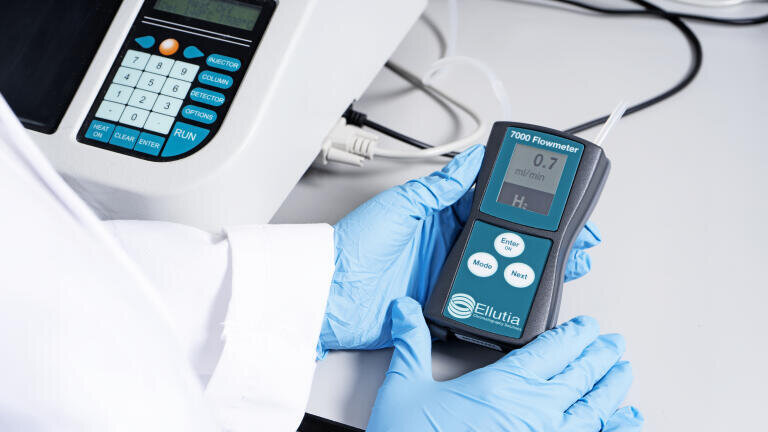
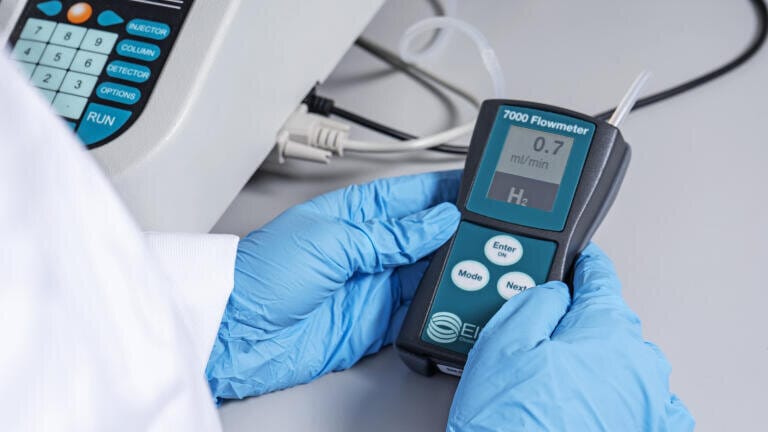
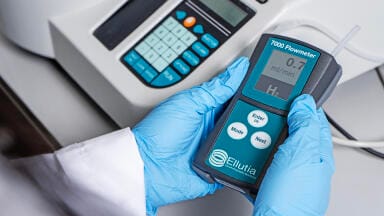
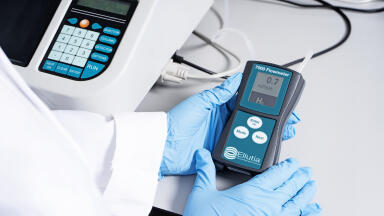
The Ellutia 7000 GC Flowmeter was designed from the ground up for gas chromatography. It measures eight gases commonly used in GC work, handles linear velocity calculations and split flow measurements, and compensates automatically for the temperature and pressure of your working environment. A 25-point calibration traceable to UKAS standards underpins every reading.
It also fits in your lab coat pocket. A flowmeter that lives on the bench gets used occasionally. One that goes in your pocket gets used properly.
Readers of LabMate can get £200 off the 7000 GC Flowmeter, plus free worldwide shipping, until 31st July 2026. Visit the website and use code LABMATE at checkout.
More information online
ILM 51.6 Sept 2026


 Product directory


.jpg)
.jpg)














.jpg)
