
Columns
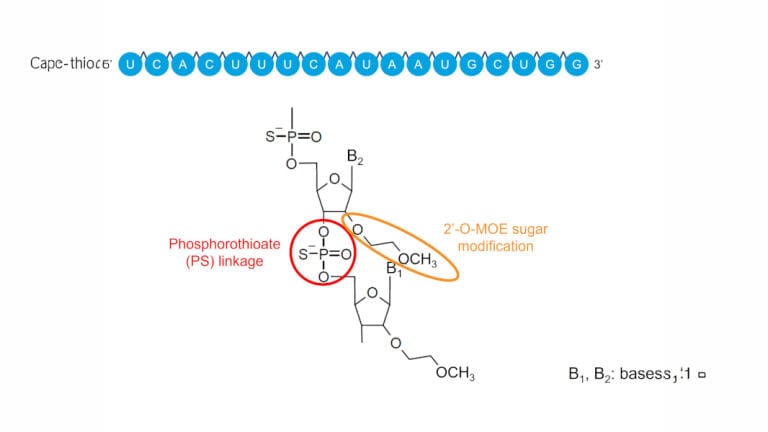
Robust analytical methods are essential for the quality control of therapeutic oligonucleotides due to their challenging impurity profile. This Application Note demonstrates high-resolution IP-RP LC analysis of nusinersen and its related impurities using the bioinert-coated YMC Accura Triart Bio C18 wide-pore column, combined with an optimised LC-MS workflow for impurity identification.
Key chromatographic parameters are evaluated to establish optimal IP-RP LC conditions for separating nusinersen and its associated impurities. The bioinert-coated YMC Accura Triart Bio C18 column supports reliable oligonucleotide analysis by minimising secondary interactions with metal surfaces while the wide-pore YMC-Triart Bio C18 stationary phase delivers sharp peaks and high-resolution separations of complex impurity profiles. The effects of temperature, organic solvent composition and ion-pair reagent selection are investigated.
Increasing the column temperature from 30°C to 70°C reduces retention time, sharpens peak shapes and improves the separation of early- and late-eluting impurities, with 70°C proving optimal. Among the organic modifiers evaluated, 100% isopropanol (IPA) provides the best overall performance, delivering sharp peaks and efficient separation of early-eluting impurities. Comparison of the ion-pair reagents TEA, DIPEA, DBA and HA identifies hexylamine (HA) as the preferred reagent, providing the strongest retention of nusinersen and the highest impurity resolution.
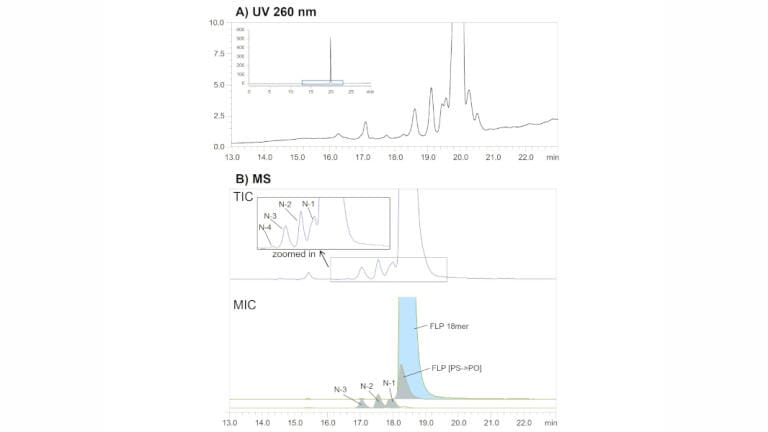
The optimised IP-RP LC method integrates seamlessly with mass spectrometry, enabling confident identification of nusinersen-related impurities. LC-MS resolves the truncated N-1, N-2 and N-3 species, while an additional N-4 impurity is detected in the total ion chromatogram. Although a co-eluting phosphodiester variant remains a recognised analytical challenge, the workflow provides comprehensive impurity profiling and demonstrates the excellent resolving power of the YMC Accura Triart Bio C18 column. The analytical approach is readily applicable to a broad range of therapeutic oligonucleotides beyond nusinersen.
More information online
ILM 51.6 Sept 2026



 Product directory























.jpg)
