
Chromatography
For laboratories analysing trace-level, multi-component analytes in complex samples, selecting a gas chromatograph that matches the application is critical to analytical efficiency and reliability of results.
Food and environmental safety testing are facing increasingly complex challenges, from volatile organic compounds (VOCs) in industrial emissions to trace-level pesticide residues in fruits, vegetables and food products. As sample matrices grow more complex and regulatory standards become stricter, higher demands are being placed on the separation capability, sensitivity and stability of testing instrumentation.
To address these demands, the GC 2000 – developed by EXPEC Technology, a subsidiary of FPI – supports a range of application-specific workflows for multi-component and trace-level analysis in food safety and environmental monitoring.
Non methane hydrocarbons (NMHC) analysis plays an important role in characterising hydrocarbon emissions and supporting the monitoring of emissions. For NMHC monitoring in ambient air and stationary source emissions, the GC 2000 delivers both good accuracy and efficiency.
Solution advantages:
• Built-in self-priming sampling system supports stable sampling.
• A single flame ionisation detector (FID) performs sequential analysis of total hydrocarbons and methane.
• After each run, the system automatically flushes the tubing.
Application benefits
• Reliable single-channel consistency and high accuracy between total hydrocarbon and methane results.
• Helps reduce carryover between runs and simplify routine maintenance.
Together, these capabilities support reliable NMHC monitoring.
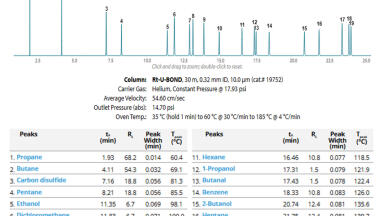
VOCs pose serious risks to both the environment and to human health. The GC 2000 offers an effective solution for detecting VOC levels in the atmosphere.
Solution advantages:
• Uses an atmospheric preconcentration system for improved detection of low-concentration compounds.
• Employs a dual-column structure with heart-cutting technology to achieve higher separation efficiency.
• Combines FID and mass spectrometry dual-channel detection without requiring cryogenic oven cooling.
Application benefits
• Supports analysis of 116 VOCs in ambient air using the validated application workflow.
• Maintains both accuracy and efficiency across a wide range of boiling points and reactivities.
By eliminating the need for liquid nitrogen or liquid carbon dioxide, the system improves lab throughput and turnaround time, while delivering reliable VOC data for ambient-air monitoring to support environmental monitoring.
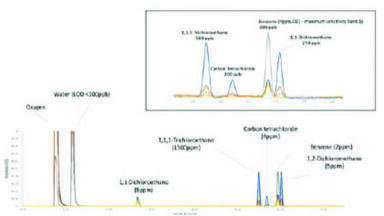
To address the challenges of detecting multiple organochlorine and organophosphorus pesticide residues in fruits and vegetables, EXPEC Technology has developed a solution based on the GC 2000. Food safety testing plays a vital role in protecting public health and ensuring regulatory compliance for agricultural products provided for consumers. As a key part of this process, pesticide residue analysis places high demands on the throughput, accuracy, and reliability of testing instruments.
Solution advantages:
• A dual-tower liquid autosampler with dual-channel synchronous/asynchronous injection and separation analysis.
• Parallel dual-channel detection with flame photometric detector and electron capture detector.
Application benefits
• Suited for high-throughput, automated sample-injection operations.
• Enables the analysis and detection of more components and more samples under the same separation conditions.
This solution provides laboratories with a fast and effective way to help protect public health.
To address the complex challenges of analysing pesticide residues and their metabolites in food, EXPEC Technology has also further developed a solution based on the GC 2000. This solution has been used for pesticide-residue testing at the Institute of Plant Protection, Chinese Academy of Agricultural Sciences, Haidian, Beijing, China.
Solution advantages:
• An inlet with ultra-deactivated surface treatment design.
• Helps to reduce matrix effects in complex food matrices.
Application benefits
• Deliver sharp chromatographic peaks even for highly active compounds.
• Improve the accuracy and reliability of results, even when working with complex food samples.
Food safety testing plays a vital role in protecting consumer health and ensuring regulatory compliance across the supply chain for food. This is especially true for multi-component, trace-level pesticide residue analysis, which places stringent demands on an instrument’s ability to resist interference and detection accuracy. For more complex pesticide residue analysis, the combination of the GC 2000 with a triple-quadrupole tandem mass spectrometer – GC–MS/MS – delivers reliable analytical performance.
Configurations can be tailored to different applications, with optional sampling systems, autosamplers, detectors, preconcentration modules and mass spectrometry available to meet a wide range of analytical needs.
ILM 51.6 Sept 2026




 Product directory




















.jpg)