Chiral
Published over 10 years ago. See the latest and most current information on Chiral.
Polarimeters measure the rotation of plane polarised light as it passes through a solution containing an optically active component such as a sugar (sucrose, glucose, etc.) certain acids and other chiral compounds that cause light to twist in proportion to their unique make-up. Specific Rotation, that is optical rotation expressed in relation to a specific sample’s concentration over its length at a particular temperature and wavelength, is therefore commonly used as a measure of purity as part of raw material testing as well as within research and production quality control.
Specific Rotation is commonly expressed in the visible spectrum (sodium yellow – 589nm). However, if little sample is available or where it has been diluted to such an extent that the path length be so short that only a slight rotation is observed, it becomes beneficial to analyse at the lower end of the visible spectrum by way of, for example, a mercury line (435, 405nm) or, better still, one that is within the ultra-violet region. In doing so, the sensitivity of the experiment is dramatically increased and so better interpretation and comparison of results against known values is achieved.
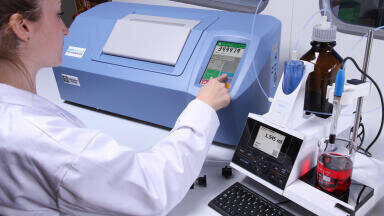
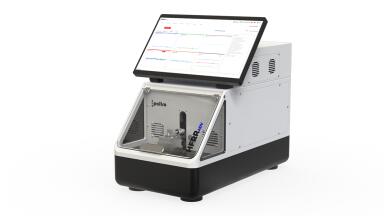
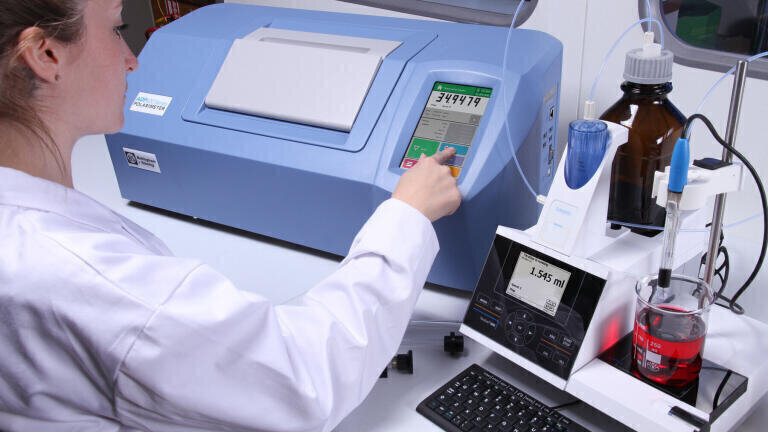
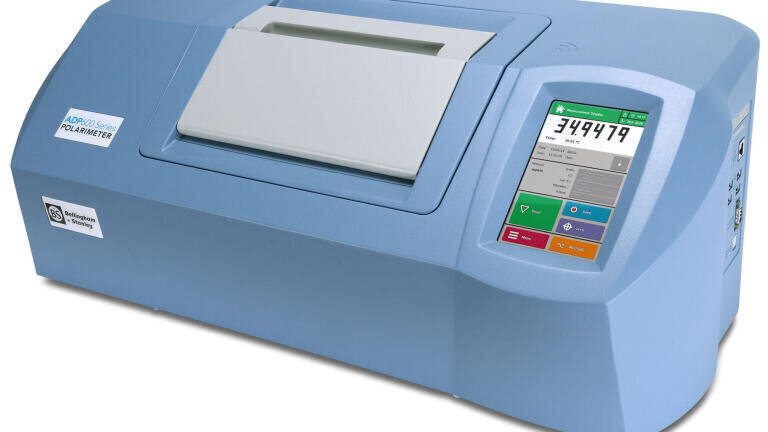
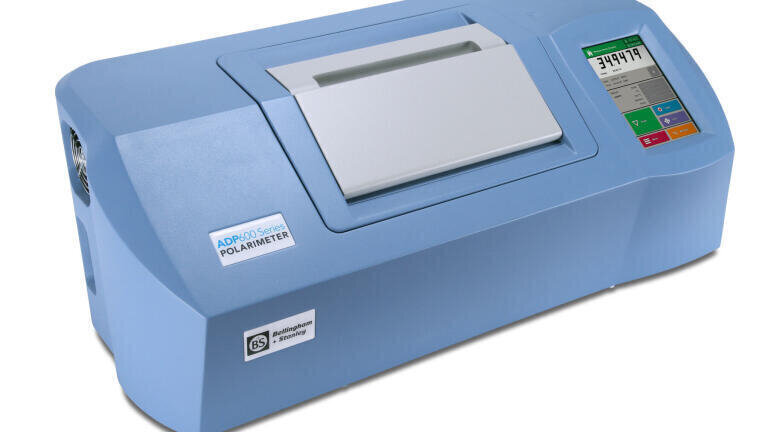
Bellingham + Stanley’s latest ADP600 Series of high precision, multiple wavelength polarimeters are ideal for such analyses within the pharmaceutical industry and for use within industrial research. The touchscreen user interface facilitates control of the instrument configuration; whether switching wavelength, applying an alternative tube length or simply checking against predetermined limits within its Methods system.
ADP600 Series polarimeters comply fully with Pharmacopeia in terms of optical rotation measurement, temperature control and wavelength and are particularly suited for those nomograms requiring UV measurement such as Indinavir Sulphate, Ropivacaine Hydrochloride, Physostigmine and even Dextromethorphan Hydrobromide, the latter being taken as low as 325nm.
ILM 51.6 Sept 2026





 Product directory