Laboratory products
Published over 2 years ago. See the latest and most current information on Laboratory products.
Asynt is pleased to announce the expansion of its LightSyn Lighthouse photochemistry platform with a wide array of additional wavelength modules. Responding to customer demand, Asynt now offers 11 different wavelength options for researchers engaged in photochemical reactions with the LightSyn Lighthouse.
In addition to the original 460 nm and 365 nm options introduced earlier this year, users can now select from lamp modules with wavelengths of 390 nm, 395 nm, 410 nm, 523 nm, 590 nm, 623 nm, 740 nm, 850 nm, 940 nm, and cool white LEDs.
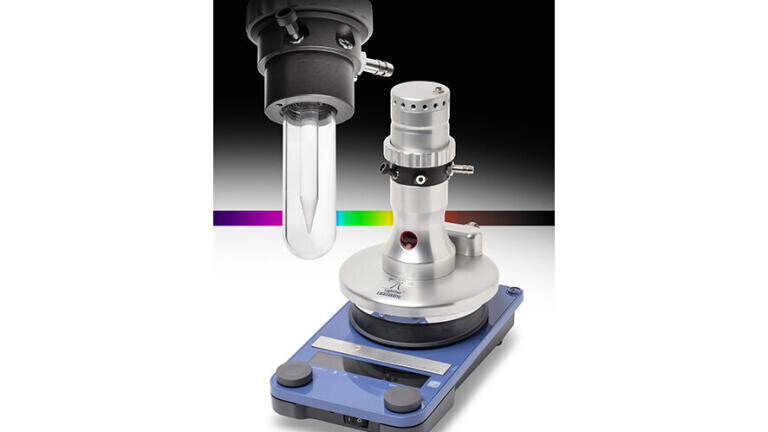
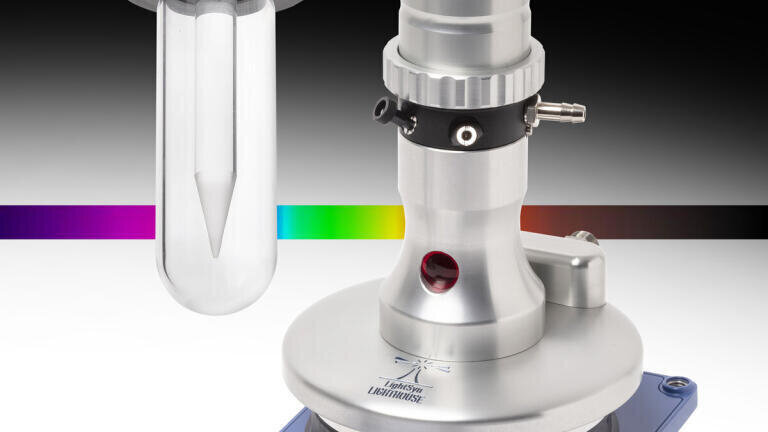
The LightSyn Lighthouse uniquely directs light produced by these modules through a quartz light pipe directly into the sample, minimising the distance light travels from the LED to nearly zero. This design enhances the exposure power to the medium and significantly improves photon flux efficiency, all without adding extra heat generated from the electronics.
Featuring built-in safety measures to minimise exposure risks, including a microswitch preventing light emission when the device is not sealed, the LightSyn Lighthouse by Asynt ensures user-friendly operation. Asynt also provides a heating/cooling base for the device, allowing precise temperature control from -30ºC to 80ºC when used with an appropriate circulator.
With a single power supply and standard fittings, users can safely set up and conduct photochemical reactions with ease, achieving repeatable results. Asynt's commitment to providing laboratory tools ‘By chemists, for chemists’ is evident in the LightSyn Lighthouse's design, allowing straightforward customisation for various applications, including gas reactions/bubbling, programmed reaction management, sample addition or removal, and potential use in flow chemistry setups with multiple LightSyn Lighthouse units.
More information online
ILM 51.6 Sept 2026



 Product directory