Laboratory products
Published over 11 years ago. See the latest and most current information on Laboratory products.
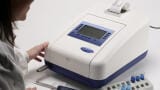
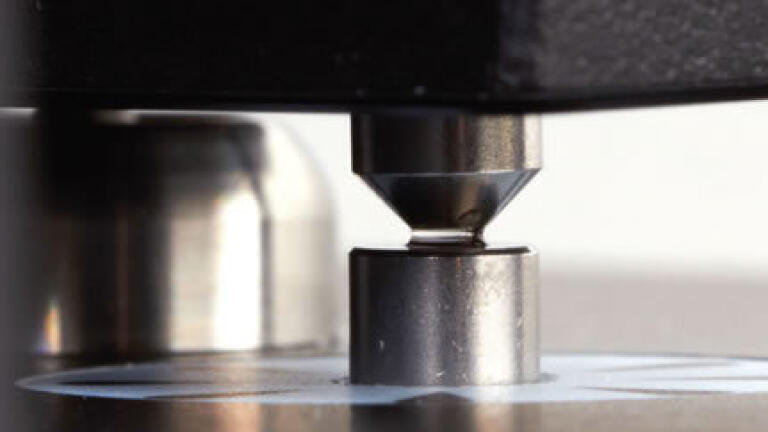
The Jenway Genova Nano is preprogrammed with parameters for a number of protein assays, several of which can be adapted for use with the micro volume accessory. Performing scaled-down reaction volumes has a number of advantages including reduction in reagent and sample volumes and use of fewer consumables such as cuvettes.
This application note describes the use of the Pierce 660nm protein assay kit (Thermo Scientific #22662) using the Genova Nano. The assay is prepared in a microtitre plate using just 10μl of test sample and has a linear range of 50-2000μg/ml. The assay is very simple and quick to perform and is compatible with reducing agents and some detergents.
Results
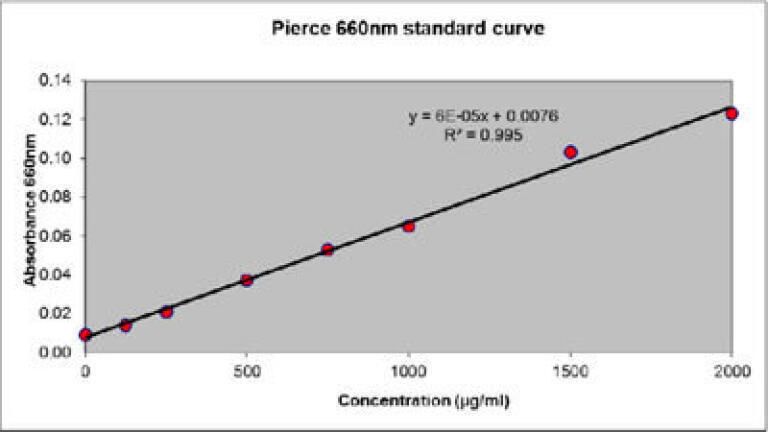
The Genova Nano has a number of curve fit options; the unknown sample concentrations were recorded using the interpolate curve fit function. The standard curve (plotted using Microsoft Excel) is shown in Figure 3 and shows a linear response over the standard protein concentration range tested.
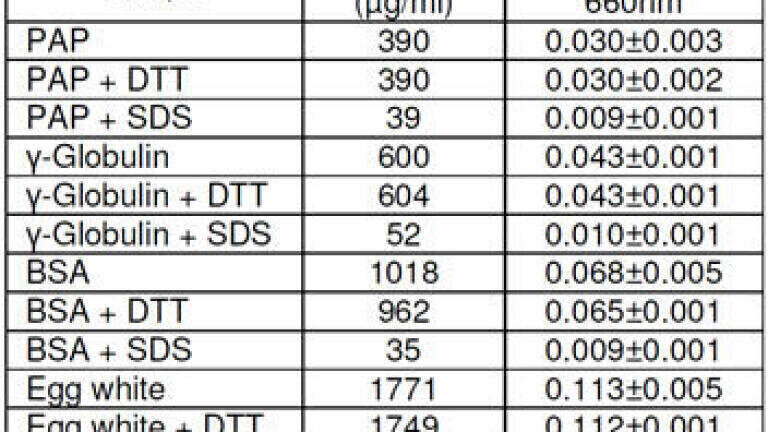
Table 1 below gives the derived protein concentration results for the unknowns together with the average absorbance values. Note that the absorbance values are low due to the 'virtual dilution' of the sample at the 0.5mm path length. Therefore only small changes in absorbance can cause a large difference in derived concentration. The standard deviations of the triplicate samples are very low and typically less than 10% of the total.
The Pierce 660nm assay is known to be affected by certain interfering substances including ionic detergents such as SDS. This is borne out by the results obtained in this assay where the SDS significantly reduced the absorbance of the samples. An Ionic Detergent Compatibility Reagent is available as an additive for the kit for use with samples containing SDS. The assay is not affected by DTT at the concentration tested and this is illustrated in the results obtained which are comparable to samples which had no DTT added.
Conclusions
The ability of the Genova Nano to measure small sample volumes pipetted directly onto the read head, introduces considerable cost savings in terms of time, sample and consumables. This application note demonstrates that a standard cuvette-based protein assay can be adapted for micro volume use with minimal modification and produces reproducible results.
To find out more information on the Genova Nano or other Jenway products please click here and view our video.
To buy the Genova Nano, please click here.
Please contact us for any further information or queries regarding Jenway products.
ILM 51.6 Sept 2026



 Product directory


.jpg)
.jpg)










.jpg)
.jpg)
.jpg)