Laboratory products
Published over 2 years ago. See the latest and most current information on Laboratory products.
Uniqsis has released an application report showcasing the efficiency of their new high-intensity Borealis™ LED light source in expediting metal-catalysed photoredox reactions. Building upon the Nobel Prize-winning research by Macmillan et al [1], photoredox catalysis has become an important strategy in chemical synthesis. Uniqsis addresses the need for practical, user-friendly benchtop photoreactor systems key to implementing this methodology in laboratories.
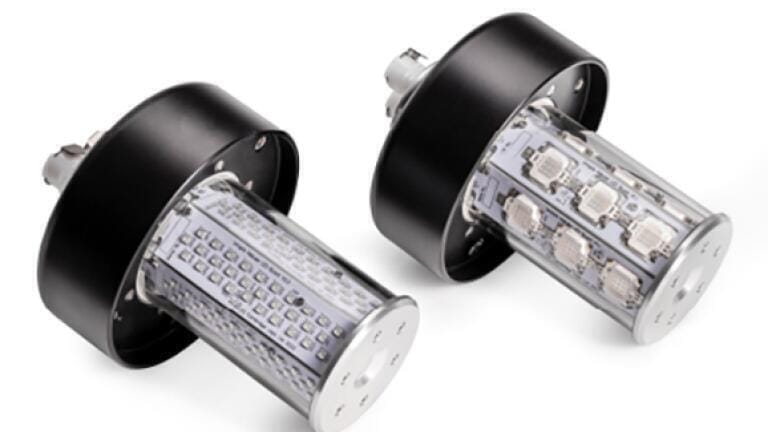
The Borealis™ LED light source, available in activation wavelengths ranging from 365nm to 525nm, has proven its efficacy in performing photochemical reactions in both batch and flow modes. Uniqsis has recently introduced a high-intensity variant of the 180W Borealis LED light source. This upgraded version employs high-output LEDs that, surpassing the efficiency of the original Chip-on-Board (COB) LEDs, generate increased light output while maintaining the same power consumption.
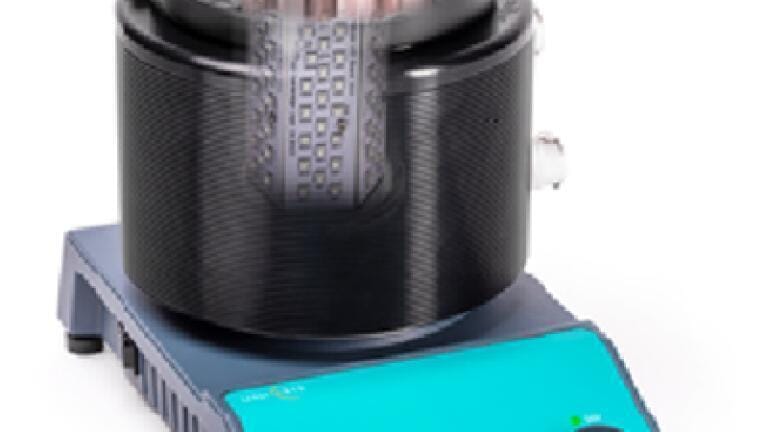
The application report focuses on two time-studies conducted in a Uniqsis Solstice 12-position multi-tube batch photoreactor, with the sole variable being the version of the 420nm Borealis LED lamp. In each instance, the LED light source was linked to a 180W Borealis digital power supply. The results highlight how the augmented photon flux delivered by the new 420nm 180W Borealis LED lamp significantly enhances the rate of a metal-mediated photoredox decarboxylative arylation (Macmillan reaction) compared to the original Mk1 version.
Read application report 33 ‘Accelerated Metal-mediated Photocarboxylative Arylation’ in full.
More information online
1. Prieto Kullmer, C. N., Kautzky, J. A., Krska, S. W., Nowak, T., Dreher, S. D., & MacMillan, D. W. Accelerating reaction generality and mechanistic insight through additive mapping. Science, 376, 532-539 (2022)
ILM 51.6 Sept 2026



 Product directory


















.jpg)
