Laboratory products
Published over 6 years ago. See the latest and most current information on Laboratory products.
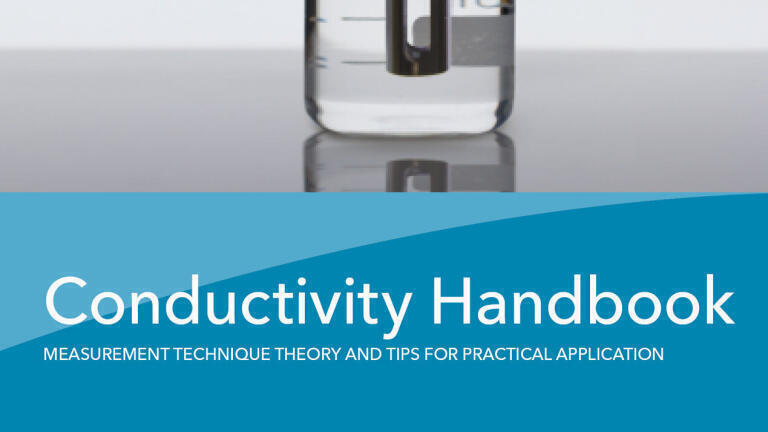
Download the Conductivity handbook here.
Testing the electrical conductivity of water or aqueous solutions provides practical information about the purity or impurity of the respective liquid. Because conductivity measurements are simple and fast, they are highly suitable for routine testing and long-term monitoring, often reducing the need for more expensive or time-consuming tests.
In natural waters, conductivity is mainly used to estimate the concentrations of dissolved salts in the water, which can provide insights into possible contamination from a spill or leak. For water resources, the conductivity may indicate whether or not the water is too saline to be drinkable or useable for irrigation or industrial use.
In many industrial applications, conductivity can be used to estimate the dissolved mineral content of water and to monitor demineralization processes used to prevent scale or remineralization processes used to prevent corrosion.
In agriculture, the salinity of water is an important factor for plant growth, and conductivity can also be used to monitor nutrient concentrations in liquid fertilisers.
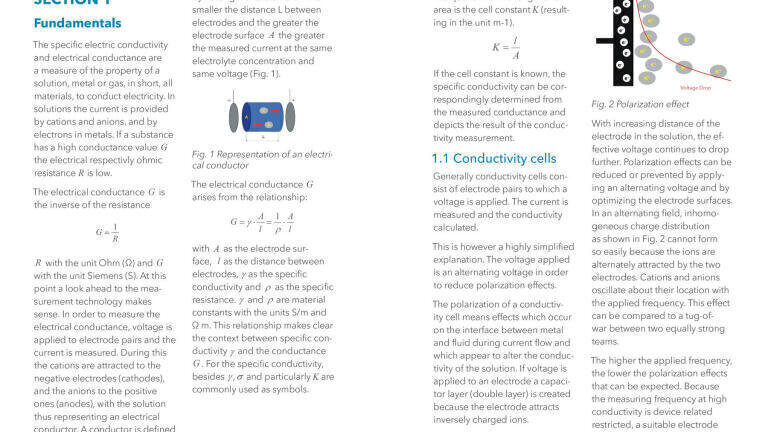
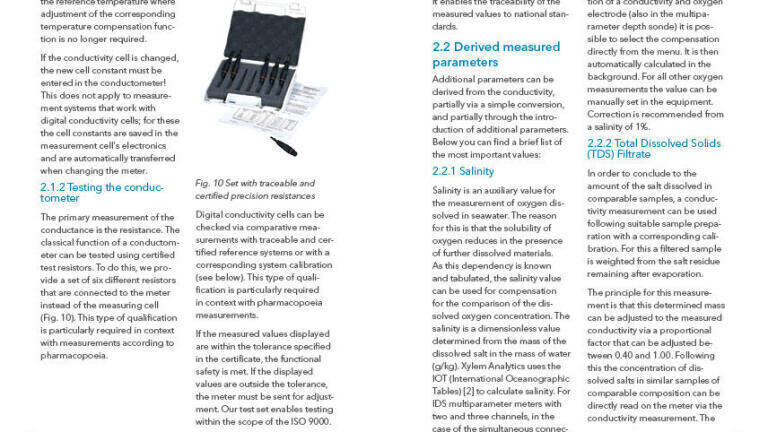
The Xylem brand WTW has been recognised for many years as a manufacturer of some of the best conductivity electrodes on the market. Our handy A5 brochure offers a theoretical introduction into conductivity measurement and a multitude of practical tips.
ILM 51.6 Sept 2026


 Product directory


.jpg)
.jpg)










.jpg)
.jpg)
.jpg)


.jpg)
