Mass spectrometry & spectroscopy
Published over 13 years ago. See the latest and most current information on Mass spectrometry & spectroscopy.
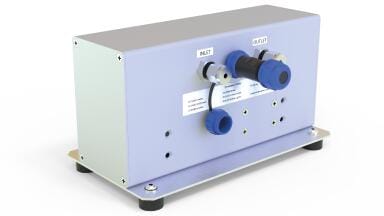
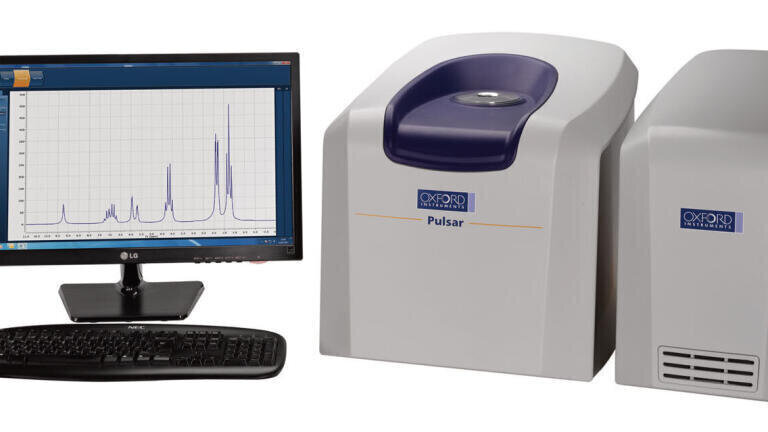
Oxford Instruments’ latest launch Pulsar™ is suitable for most labs and industrial production areas allowing even the non-expert user to easily establish routine experiments. A team at the Institute of Food Research (IFR), Norwich, UK, led by Dr Kate Kemsley, Head of the Analytical Sciences Unit, funded by the Technology Strategy Board (TSB), has been trialling Pulsar.
"We have a high-resolution NMR facility within the Analytical Sciences Unit, but most of the people in the team have backgrounds other than NMR spectroscopy - FTIR, chemometrics, statistics. However, this has been no barrier to getting started with Pulsar. We have all very quickly learned how to collect spectra, check linewidths and adjust the XYZ shim. Even the theoretician who hadn't done a practical experiment since undergraduate days is hooked," said Dr Kemsley.
"We have been impressed by how easy it is to perform a high-throughput experiment - a recent Masters student carrying out his final year research project with us was able to produce 200 quality spectra in a matter of days," she continued.
Pulsar requires a standard mains electrical supply and is offered at a fraction of the price of current high-field NMR instruments with virtually no running costs. It incorporates a 1.4T (60MHz proton resonance) rare-earth permanent magnet with superior homogeneity, providing outstanding spectral resolution, generating routine spectra in seconds.
Instrument control comes from a seamless workflow package, while the processing of data is achieved using the industry-leading Mnova NMR software from Mestrelab.
ILM 51.6 Sept 2026





 Product directory