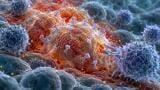
Laboratory scientists have used nanotechnology to place sensors on the surface of cells in order to monitor single-cell interactions in real-time.
In a study, published by Nature Nanotechnology and undertaken by researchers at Brigham and Women's Hospital (BWH), the sensors were placed on single cells in the hope that they will provide great insight into signalling between cells and interactions with drugs.
This information will have a number of implications for basic science and drug discovery in the future, according to Jeffrey Karp, senior study author and co-director of the Center for Regenerative Therapeutics (ReGen Rx) at BWH.
"We may one day be able to test a drug's influence on cell-cell interactions before deciding on the appropriate therapeutic for each person," he added.
In the future, it is anticipated that this process could be used to track and monitor the environment surrounding transplanted cells, as well as create a deeper understanding of the events which signal inflammation.





 Product directory