

News
Published over 3 years ago. See the latest and most current information on News.
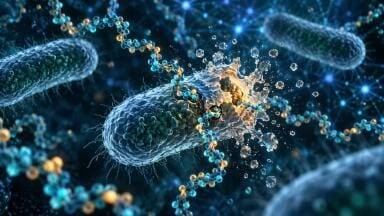
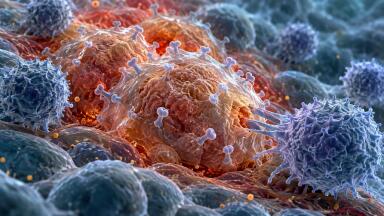
Researchers from the University of British Columbia (UBC) have identified a new protein that helps an oral bacterium thrive in other locations around the body. Most notably, this bacteria is prevalent in the tumours of colorectal cancer patients.
“This bacterium is common in the mouths of humans and generally doesn’t cause disease in that location. However, it can travel through the bloodstream to other areas of the body, which leads to some pretty big health concerns,” says Dr. Kirsten Wolthers, Associate Professor of Biochemistry and Microbiology at UBC’s Okanagan Campus.
The presence of the bacteria can contribute to tumour growth, spread of cancer to other sites in the body, and resistance to chemotherapy.
With the help of the CMCF beamline at the Canadian Light Source (CLS), Wolthers and her colleagues determined that the new protein they identified enables the bacteria to take essential nutrients, such as iron, from our blood cells.
“Most of the iron in the body is tied up in a molecule called heme which is surrounded by a protein cage,” says Wolthers. “What we’ve discovered now is a new way for this bacterium to acquire essential nutrients from a very abundant source allowing it to grow very well in parts of the body that are free of oxygen.”
The discovery could eventually lead to the development of new drugs that specifically target the protein.
More information online
ILM 51.6 Sept 2026



 Product directory
















.jpg)

.jpg)



.jpg)
