News
Published over 5 years ago. See the latest and most current information on News.
An international team of scientists, led by the University of Bristol, has potentially identified what makes SARS-CoV-2 highly infectious and transmissive, enabling it to attack organs outside of the respiratory system, such as the brain and heart.
SARS-CoV-2 incorporates a viral protein, or ‘Spike’ protein that enables attachment of the virus to the surface of human cells lining the respiratory or intestinal tracts; once the virus has invaded the cell it replicates multiple copies of itself which are then released leading to the transmission of SARS-CoV-2.
In this breakthrough study, the research groups in Bristol’s Faculty of Life Sciences, Professor Peter Cullen from the School of Biochemistry; Dr Yohei Yamauchi, Associate Professor and virologist from the School of Cellular and Molecular Medicine, and Dr Boris Simonetti, a senior researcher in the Cullen lab, used multiple approaches to discover that SARS-CoV-2 recognises a protein called neuropilin-1 on the surface of human cells to facilitate viral infection.
Yohei, Boris and Pete explained: "In looking at the sequence of the SARS-CoV-2 Spike protein we were struck by the presence of a small sequence of amino acids that appeared to mimic a protein sequence found in human proteins which interact with neuropilin-1. This led us to propose a simple hypothesis: could the Spike protein of SARS-CoV-2 associate with neuropilin-1 to aid viral infection of human cells? Excitingly, in applying a range of structural and biochemical approaches we have been able to establish that the Spike protein of SARS-CoV-2 does indeed bind to neuropilin-1.
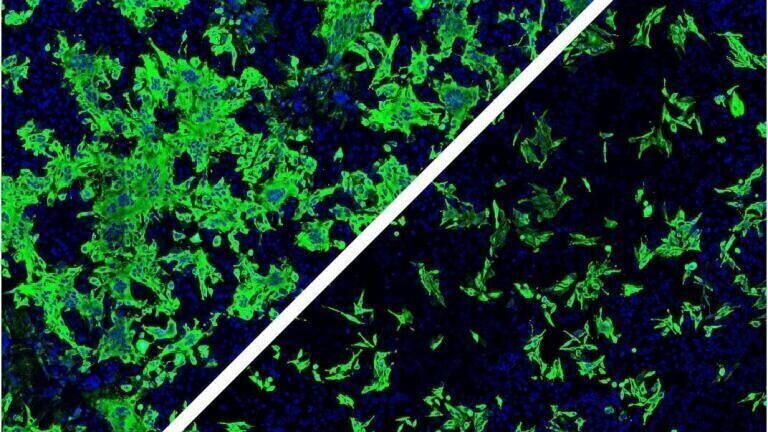
"Once we had established that the Spike protein bound to neuropilin-1 we were able to show that the interaction serves to enhance SARS-CoV-2 invasion of human cells grown in cell culture. Importantly, by using monoclonal antibodies - lab-created proteins that resemble naturally occurring antibodies - or a selective drug that blocks the interaction we have been able to reduce SARS-CoV-2’s ability to infect human cells. This serves to highlight the potential therapeutic value of our discovery in the fight against COVID-19."
Intriguingly, scientists at the Technical University of Munich, Germany and the University of Helsinki, Finland, have independently found that neuropilin-1 facilitates SARS-CoV-2 cell entry and infectivity.
Together the Bristol researchers concluded: “To defeat COVID-19 we will be relying on an effective vaccine and an arsenal of anti-viral therapeutics. Our discovery of the binding of the SARS-CoV-2 Spike to neuropilin-1 and its importance for viral infectivity provides a previously unrecognised avenue for anti-viral therapies to curb the current COVID-19 pandemic.”
The SARS-CoV-2 work at Bristol was facilitated by Dr Andrew Davidson and Dr David Matthews, Readers in Virology in the School of Cellular and Molecular Medicine and Bristol UNCOVER and through key collaborations with Professor Brett Collins of the University of Queensland, Brisbane, Australia, and Professor Tambet Teesalu of University of Tartu, Estonia.
The study was funded by grants from the European Research Council, MRC, Wellcome Trust, Lister Institute of Preventive Medicine, Elizabeth Blackwell Institute and the Swiss National Science Foundation.
'Neuropilin-1 is a host factor for SARS-CoV-2 infection' by Daly, Simonetti, Klein et al in Science
More information online
ILM 51.6 Sept 2026



 Product directory


.jpg)