News
Published over 14 years ago. See the latest and most current information on News.
Scientists have made an important step forward in their understanding of cryoprotectants – compounds that act as natural ‘antifreeze’ to protect drugs, food and tissues stored at sub-zero temperatures.
Researchers from the Universities of Leeds and Illinois, and Columbia University in New York, studied a particular type of cryoprotectants known as osmolytes. They found that small osmolyte molecules are better at protecting proteins than larger ones. The findings*, could help scientists develop better storage techniques for a range of materials, including human reproductive tissue used in IVF.
“If you put something like human tissue straight in the freezer, ice crystals start to grow in the freezing water and solutes – solid particles dissolved in the water – get forced out into the remaining liquid.
This can result in unwanted high concentrations of solutes, such as salt, which can be very damaging to the tissue,” said Dr Lorna Dougan from the University of Leeds, who led the study. “The addition of cryoprotectants, such as glycerol, lowers the freezing temperature of water and prevents crystallisation by producing a ‘syrupy’ semi-solid state. The challenge is to know which cryoprotectant molecule to use and how much of it is necessary.
“We want to get this right so that we recover as much of the biological material as possible after re-thawing. This has massive cost implications, particularly for the pharmaceutical industry because at present they lose a large proportion of their viable drug every time they freeze it.”
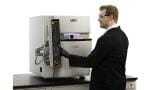
Dr Dougan and her team tested a range of different osmolytes to find out which ones are most effective at protecting the 3D structure of a protein. They used an atomic force microscope to unravel a test protein in a range of different osmolyte environments to find out which ones were most protective. They discovered that smaller molecules, such as glycerol, are more effective than larger ones like sorbitol and sucrose. The research was funded by the UK Engineering and Physical Sciences Research Council, the US National Institutes of Health and the China National Basic Research Program.
ILM 51.6 Sept 2026





 Product directory