Chromatography
Published over 15 years ago. See the latest and most current information on Chromatography.
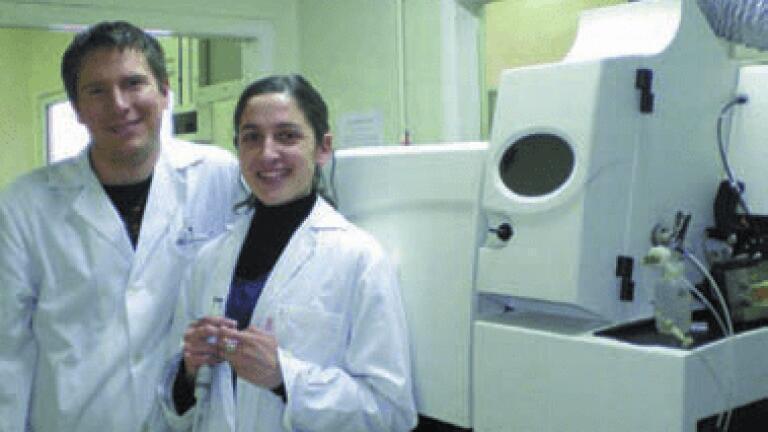
Thermo Fisher Scientific, Inc announces that the University of Oviedo’s analytical spectrometry research group has implemented the Thermo Scientific XSERIES 2 ICP-MS to perform reliable and interference-free sulphur detection in proteins.
The analytical spectrometry research group at the University of Oviedo in Asturias, Spain aims to solve the analytical challenges encountered by science and technology. Within this framework, a small sub-group has been established focusing on the development of inductively coupled plasma-mass spectrometry (ICP-MS) based analytical methods for the quantification of biopolymers such as DNA and proteins.
Although ICP-MS detection does not provide any structural information, its outstanding capability to quantify most of the elements proves valuable for accurate protein quantification. Keeping pace with the latest technological developments, the University of Oviedo’s research group has coupled the XSERIES 2 ICPMS with a reversed-phase capillary liquid chromatography (μLC) system to facilitate precise determination of sulphur isotopes in standard proteins.
Download the case study at www.thermoscientific.com/xseries2
LMUK 51.7 Nov 2026

 Product directory