Chromatography
Published over 4 years ago. See the latest and most current information on Chromatography.
Synthetic oligonucleotides are extremely promising candidates for biopharmaceuticals in a wide range of diseases. This is why nucleic acid therapeutics such as silencing RNA (siRNA), messenger RNA (mRNA) and antisense oligonucleotides (ASOs) are gaining considerable attention in current research.
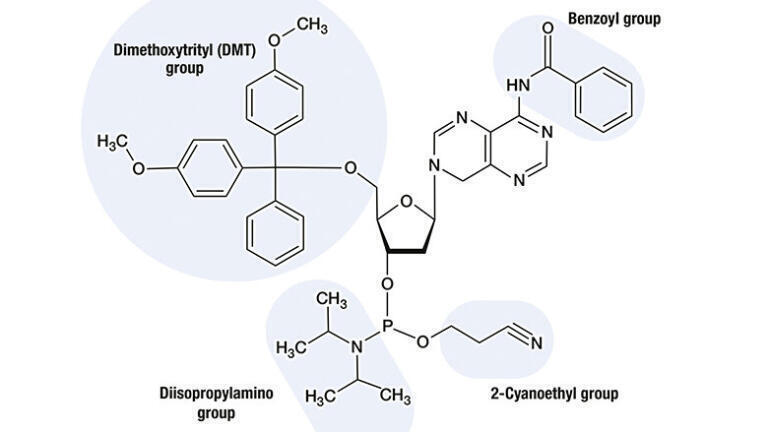
Phosphoramidites are the essential part of the chemical synthesis of oligonucleotides, short fragments of nucleotides and analogues. To prevent any side reactions on residual reactive sites such as hydroxyl and amino groups during oligonucleotide synthesis, these groups must be protected. Therefore, the highly reactive native nucleotides are modified with four different protecting groups. Figure 1 shows the protecting groups using the example of an adenosine based phosphoramidite.
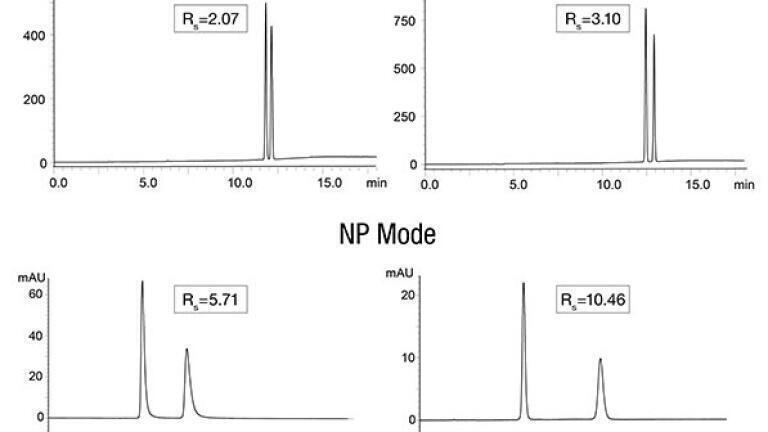
During the chemical oligonucleotide synthesis, errors can occur which is why the purity of the phosphoramidites needs to be closely monitored. In a new application note two different separation modes - reversed phase (RP) and normal phase (NP) - are used for the analysis of four different phosphoramidites. Due to the complexity of these molecules different interactions can be used in order to achieve reasonable retention and resolution. As phosphoramidites have a chiral centre at the phosphorus atom two isomers are present resulting in double peaks occurring in the chromatograms.
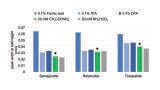
All separations were performed using the highly robust YMC-Triart columns which are an ideal choice for modern biochromatography applications. For RP separations a YMC-Triart C18 column was used resulting in sharp peaks. A YMC-Triart SIL a mobile phase containing triethylamine as additive (examples in Figure 2). Excellent resolution was obtained for all compounds.
ILM 51.6 Sept 2026





 Product directory