Chromatography
Published over 4 years ago. See the latest and most current information on Chromatography.
Hydrophobic interaction chromatography (HIC) is a separation mode used for the analysis of biomolecules such as antibody-drug-conjugates (ADCs), monoclonal antibodies (mAbs) or proteins in general. Analytes are separated based on the differences in their surface hydrophobicity similar to reversed phase (RP) chromatography. However, a big plus is that analytes maintain their original structure and therefore functionality, making HIC a useful separation mode for intact protein analysis or protein purification.
HIC utilises reversible interactions that occur between the analyte and hydrophobic stationary phase ligands attached to the particle surface by applying an inverse salt gradient. A high salt concentration in the beginning of the gradient enhances the hydrophobic interactions between the target molecules and the stationary phase resulting in their retention. By decreasing the salt concentration, the strength of the interaction weakens and the analytes elute.
In this new Technical Note by YMC you will learn insights about:
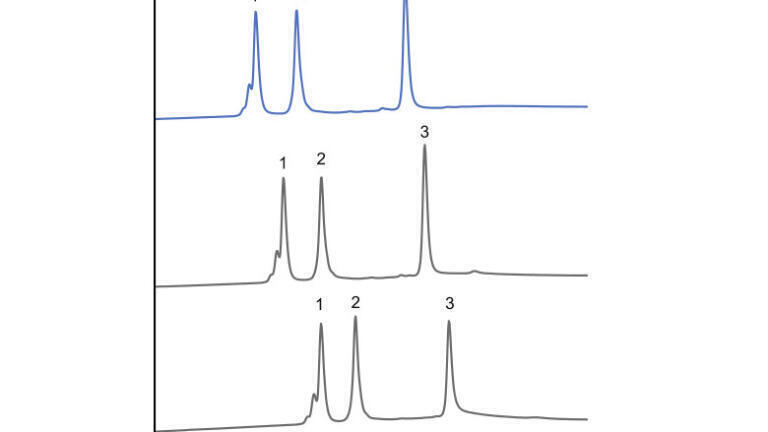
If you want to know more about the resolving power of non-porous HIC columns for intact proteins, check out this Technical Note.
ILM 51.6 Sept 2026





 Product directory