Microscopy & microtechniques
Published over 13 years ago. See the latest and most current information on Microscopy & microtechniques.
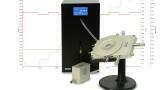
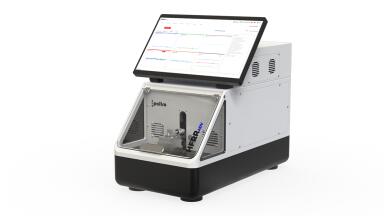
Linkam Scientific Instruments report on the use of their popular THMSG600 and TS1500 heating stages which are being used for geological research at the Institute of Earth Sciences, Taiwan.
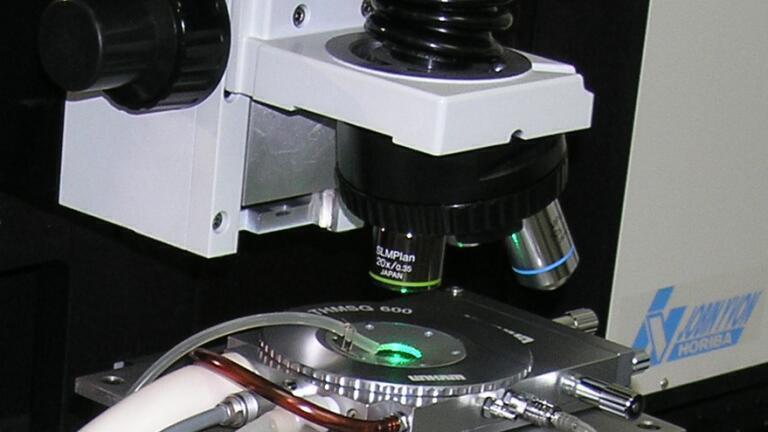
Dr Chung-Cherng Lin and his team are using the Linkam THMSG600 and TS1500 to help with this research. He commented: "Temperature, pressure and composition are the three most important factors that influence the physical and chemical properties of a mineral inside the Earth. In our lab, most of the temperature experiments have been carried out by the combination of a Raman spectrometer with the heating stages from Linkam."
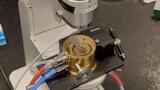
The THMSG600 is designed specifically for geological applications. Unrivalled accuracy and control of temperature enable the user to characterise sample reactions to better than 0.1°C and hold a stability of 0.01°C. The response time to a ‘Hold’ or 'Limit' command where the temperature is stable to 0.1°C is only 0.1 seconds at 30°C/min. A perfectly uniform temperature is achieved by heating the sample on all sides: the sample is placed on a 7mm quartz cover slip which is encased within a pure silver lid.
The TS1500 stage, with a temperature range from ambient to 1500°C, is ideally suited to the study of small geological samples. The sample is placed inside the ceramic sample cup ensuring that the sample is heated from below as well as the sides. The new T95 controller enables the stage to heat samples at an incredible 200°C/min. The TS1500 has the option to be ordered with vacuum connectors, for experiments requiring low pressure conditions.
Dr Chung-Cherng Lin added "the latest study on the iso-structural alkaline earth phosphates has revealed that the variation rate with respect to the temperature in the Raman frequency of the internal modes of the PO4 group increase with the increase of P-O bond energy."
He noted that: "The reliability of experimental results depends significantly on the accuracy in temperature measurement. These stages have good accuracy in temperature (e.g. uncertainty is smaller than one degree at 800°C) and are easy to use. Using these heating stages, we have obtained reliable frequency-temperature dependences for Raman bands of some minerals and compounds.
ILM 51.6 Sept 2026





 Product directory