Labmate Awards for Excellence 2025
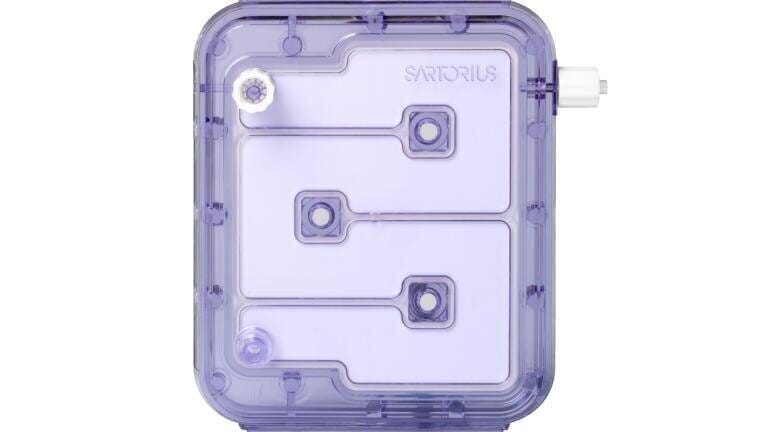
Tangential flow filtration (TFF) is the most efficient separation technology for concentrating macromolecules from sample volumes of 100 millilitres or more, but is often considered too complicated and expensive for laboratory research. Vivaflow® SU overcomes these challenges by making TFF more accessible to researchers through unparalleled ease of use and efficiency.
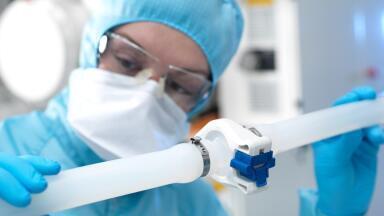
Taking design cues from the original Vivaflow® 50, Vivaflow® SU is an all-in-one TFF cassette, consisting of a membrane integrated into a robust, disposable housing. This eliminates the need for cassette holders and sophisticated systems, minimising equipment and running costs. In addition, directional, flexible connectors and the included tubing kits simplify everything from sourcing to setup. For an ultrafiltration process, the user only needs to provide a standard pump and suitable reservoirs (e.g. beakers), and the system can be set up in under five minutes with no extra parts to order.
The modular design of Vivaflow® SU makes scale up for larger sample volumes effortless. Special order numbers are available to set up and run two cassettes in series via a customized tubing kit. This doubles the throughput of Vivaflow® SU from 500 mL to 1 L without the need to order additional parts and minimises waste. Furthermore, the cassettes are diafiltration-ready. When used with the dedicated feed reservoir and a length of tubing for the exchange buffer feed, buffer exchange or desalting can be carried out using only a fraction of the time and water required by alternative methods such as dialysis.
As a single-use consumable, Vivaflow® SU prevents carryover to maintain the integrity of samples that have taken several days or even weeks to prepare. This also means that time-consuming and hazardous cleaning procedures can be avoided, freeing up resources to support time-critical projects, while improving laboratory safety and reducing water consumption.
In use, users can benefit from enhanced performance, thanks to the advanced flow path and choice of 14 membranes (including seven new options). The unique, switchback design makes TFF processes up to 1.4 times faster, while the appropriate membrane chemistry and molecular weight cut-off can be selected to maximize recovery of virtually any target molecule, from proteins to viral vectors and nucleic acids to nanoparticles. In addition, unlike conventional TFF systems, users do not need to adjust feed flow rates and transmembrane pressures – they simply set the pump to the recommended flow rate, eliminating the need for tedious process optimisation.
Finally, Vivaflow® SU has been designed with sustainability at its core. Each cassette contains 30.5% less plastic than the previous generation product and is made from locally sourced, certified renewable material. In addition, the paper-rich packaging offers improved recyclability, while the instruction manual has been digitised to minimize the amount of paper used for the printed materials, which now consists of a concise quick start guide.
In summary, Vivaflow® SU has introduced not one but several improvements to make lab-scale TFF more intuitive, efficient and sustainable. From simplifying ordering, set-up and handling, to using sustainable raw material and minimising waste, this product is highly deserving of the Labmate Awards for Excellence in the category of Innovation of the Year for best separation science innovation.
ILM 51.6 Sept 2026


 Product directory


.jpg)
.jpg)

















.jpg)
