Chromatography
Published over 7 years ago. See the latest and most current information on Chromatography.
In a milestone study of two million children across five countries, a team of researchers has uncovered the real cause of autism spectrum disorder. According to the team, genetics is the biggest and most influential factor in the development of ASD, with inherited genes accounting for 81% of the risk. Meanwhile, environmental factors such as prenatal exposure to air pollution or the presence of a sibling with autism account for less than 20% of the risk.
The team also explored maternal factors, which are often cited as an ASD risk factor. They found that variables such as the mother's weight, presence of polycystic ovary syndrome and birth by caesarian section have a "nonexistent or minimal” impact on the risk of developing autism spectrum disorder.
"Based on population data from five countries, the heritability of ASD was estimated to be approximately 80%, indicating that the variation in ASD occurrence in the population is mostly owing to inherited genetic influences, with no support for contribution from maternal effects. The results suggest possible modest differences in the sources of ASD risk between countries," reads the report conclusion.
The study is the largest of its kind, with results published in the journal JAMA Psychiatry. To gather the results, an international team of researchers examined the medical records of more than two million children born in Western Australia, Denmark, Sweden, Finland and Israel between 1998 and 2011. By the age of 16, more than 22,000 participants were diagnosed with ASD. They found that while environmental factors have a small role to play in the development of autism, genetics are the main determiner.
“The results show that genetic factors are most important (about 80% of the variation in risk) but that the environment also play a role,” comments Sven Sandin, senior author of the study and statistician and epidemiologist at the Karolinska Institute in Stockholm.
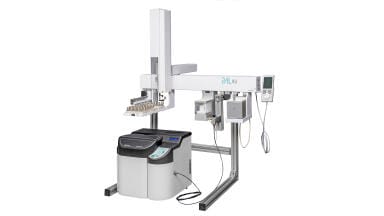
While some studies require meticulous analysis of medical records, others call for sophisticated laboratory equipment. For an introduction to the latest modified USP <467> HS-GC-FID method for residual solvent determination in pharmaceutical products, don't miss 'Simplified, cost-effective headspace GC method for residual solvents analysis in pharmaceutical products'
ILM 51.6 Sept 2026



 Product directory


.jpg)
.jpg)
















.jpg)
