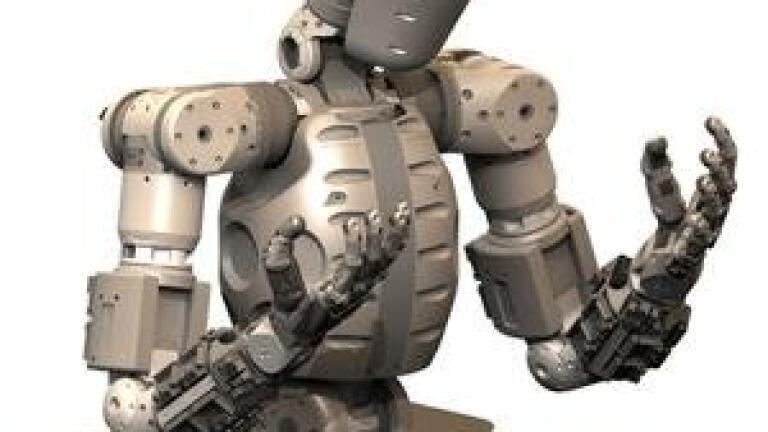
The future of hospital-based childcare could have an artificial face with the news that scientists are developing robots capable of expressing emotional cues.
By modelling some of the behaviour exhibited by young humans and chimpanzees, the scientists at the University of Hertfordshire have succeeded in creating robots which express a number of core emotions.
It is hoped that the research will lead to the ability to provide emotionally responsive companion robots for hospitalised children suffering from diabetes.
For now, the studies focused on developing robots which respond to a particular person more than others - after forming an emotional bond with that individual.
The prototypes are able to express emotions including fear, anger, excitement, happiness, sadness and pride.
If left to face a stressful situation alone, they will also demonstrate a visible distress response.
The University of Hertfordshire's 24,000-strong student community includes around 2,000 international students, with more than 2,500 members of staff working for the academic institution.




 Product directory