Laboratory products
Published over 2 years ago. See the latest and most current information on Laboratory products.
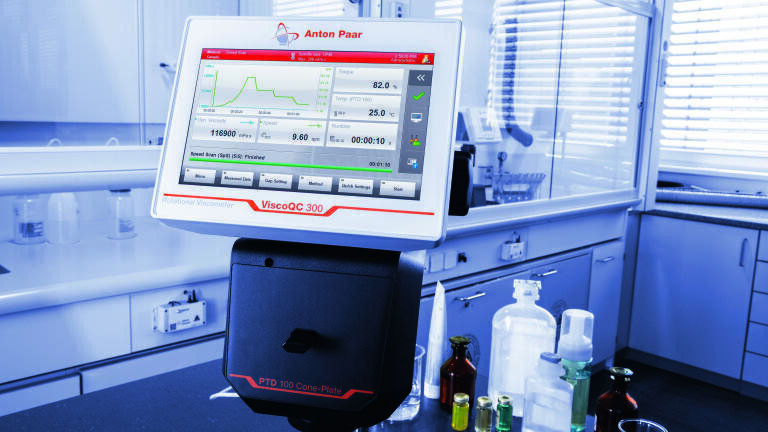
Ensuring that there is enough time is a challenge in an industry as tightly regulated as the pharmaceutical industry. Cost-effective compliance and traceability must also be strictly adhered to in order to deliver safe, high-quality products. Anton Paar’s ViscoQC 300 rotational viscometer meets and exceeds stringent standards like the FDA’s 21 CFR Part 11, and emphasises unique traceability features whilst also being able to trace and track measurements and instrument performance.
Activating the V-Comply software on ViscoQC 300 enables all key features to fulfill regulations of 21 CFR Part 11: audit trail (the logbook for each event); user level management and logon settings; electronic signatures with up to three-step signing process; advanced data integrity (no deletion of data, users or methods). Other useful functions include the Virtual Network Computing (VNC) mode, value visibility mode, non-storage mode and more.
The V-Comply also comes with a customised qualification package which goes far beyond simple installation and basic IQ/OQ. A detailed risk analysis, performance qualification, traceability matrix and final qualification report increase the value of the qualification package and the qualification process as a whole for the customer.
The integration with Anton Paar’s own AP Connect software, available as a 21 CFR Part 11 pharma-compliant version, further fortifies the ViscoQC Rotational Viscometer's commitment to data integrity. By facilitating paperless data management and transfer from the instrument to a central database, this connectivity minimises the risk of manual errors associated with traditional recordkeeping methods. Real-time data transfer ensures that the information is not only accurate, but also readily available, fostering a proactive approach to quality control.
The full strength of such applications in the regulated environment is further enhanced by the Toolmaster™ feature, i.e. automatic spindle recognition, ensuring that the instrument is not only aware of the components used, but can also restrict their use to specified methods.
More information online
ILM 51.6 Sept 2026



 Product directory




















.jpg)
.jpg)
.jpg)


.jpg)
