Laboratory products
Published over 7 years ago. See the latest and most current information on Laboratory products.
Mechanical separation between the fluid handled and the valve’s control mechanism is one of the most essential features required for the sensitive applications of analytical and medical technology.
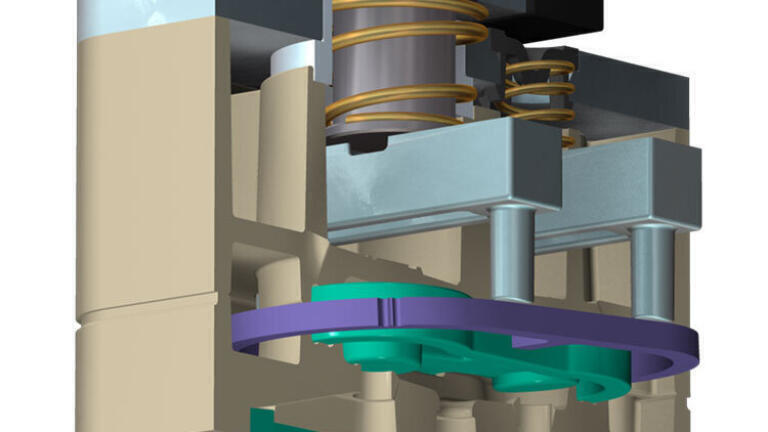
Flapper technology is among the most sophisticated and safest solutions for fluid isolation. Due to its specific characteristics, relatively high pressure rates are achieved – whilst the valve's pump effect is eliminated. Not only does it exclude particulate contamination caused by friction of moving parts, it also minimises heat transfer to the media, and even provides protection to the valve itself from harsh media.
Typical fields of application are equipment with stringent sterility assurance and process safety requirements, such as analysers, blood and specimen purification equipment, chromatographs, dosing systems, gas mixers, micro-reactors, pipetting workstations etc.
Emerson offers 6 different fluid isolation technologies. They are designed to:
Flapper technology builds upon a rocker mechanism. It’s special design allows significantly higher pressures to be achieved whilst the valve’s pump effect is eliminated.
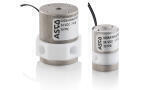
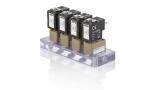
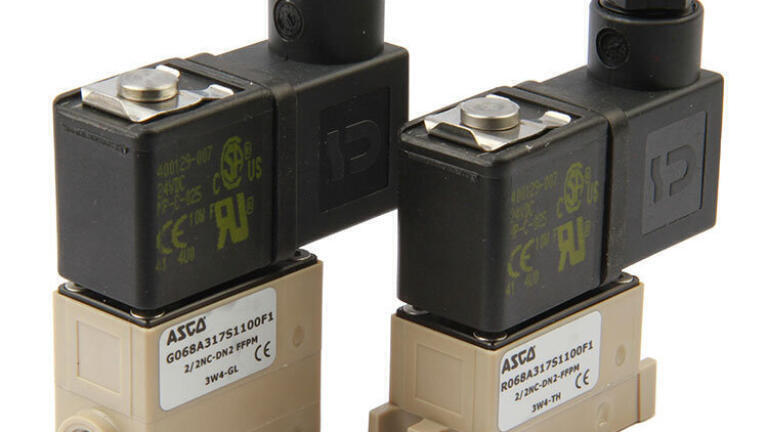
The ASCO 2/2 and 3/2 (16 and 22 mm) Series 068 fluid isolation solenoid valves with flapper mechanism, is suitable for use with neutral or aggressive liquids and gases. Fluid contamination is prevented by the fluid isolation design and the use of high-quality materials (PEEK and FFPM/FPM/EPDM).
The special flapper mechanism allows high pressures (up to 10 bar) to be achieved at large orifice sizes (0.8 mm to 4 mm). The use of a power-save connector lowers the holding power down to 2.5 Watts (or down to 1.5 Watts), thus minimising the heat transfer into the fluid.
Your benefits:
Emerson also offers an ASCO proportional controlled flapper valve with a tough PEEK material body that can withstand even the most aggressive media, considerably increasing its life span and ensuring a safe and accurate operation at all times. It has a pressure range of 0 to 4.5 bar, and a temperature range from 5ËšC to +50ËšC.
In addition it offers the following advantages:
ILM 51.6 Sept 2026




 Product directory


















.jpg)