Microscopy & microtechniques
Published over 8 years ago. See the latest and most current information on Microscopy & microtechniques.
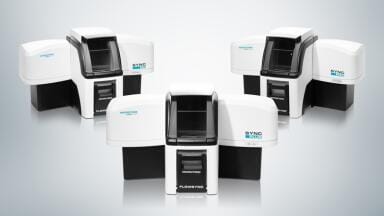
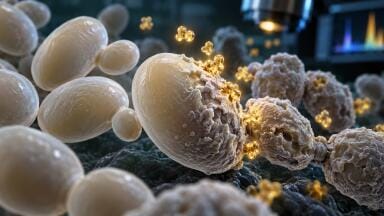
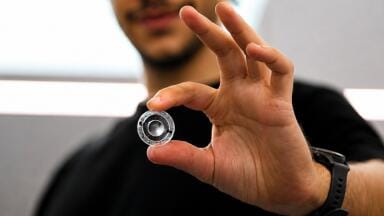
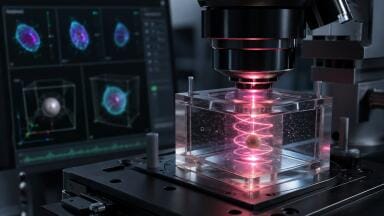
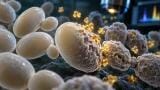
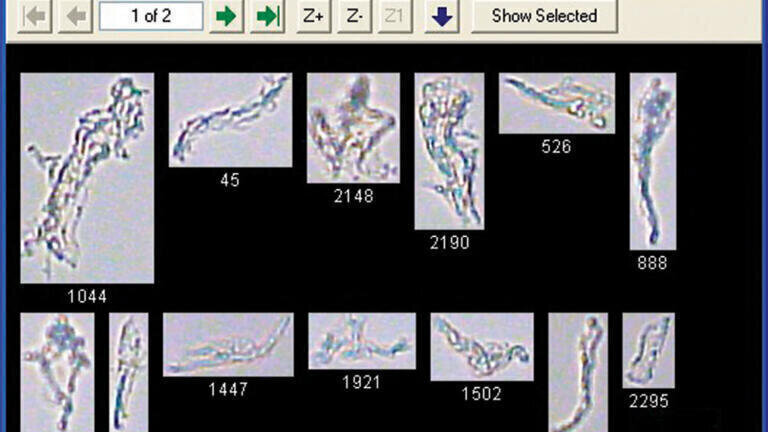
For the first time, new instrumentation featuring Nano-Flow™ particle imaging provides digital images of particles ranging in size from 300 nm to 10 µm. Using patented, oil immersion technology for enhanced optical resolution, the new FlowCam® Nano from global laboratory instrumentation manufacturer Fluid Imaging Technologies, Scarborough, ME automatically reveals protein agglomerates, silicon oil droplets, glass shards and other opaque, transparent and translucent sub-visible particles with the high resolution imagery needed for identification. Particle analysers based on light obscuration, dynamic light scatter, Brownian motion or Coulter Principle are unable to image these particles and allow for their identification.
Ideal for analytical scientists, biochemists, formulation scientists, lab managers and other biopharmaceutical professionals, the new FlowCam Nano was developed to find, expose and identify nanoparticles in protein formulations and help track the progression of protein agglomerates from individual, proteinaceous particles into the larger aggregates that pose a threat to the safety, efficacy, stability and longevity of parenteral bioformulations. In addition, the FlowCam Nano may serve as an invaluable companion to USP<788> compliance testing methods for particulate matter by documenting the presence and type of nano-scale particles, which may cause failed test results.
The FlowCam particle imaging and analysis family of instruments now encompasses six models engineered to analyse particles ranging from 300 nm to 5 mm in size. The FlowCam models automatically measure more than 40 different parameters in real-time from size, count and concentration to colour, grayscale and morphological characteristics such as circularity, elongation and fibre curl.
For more information visit https://ilmt.co/PL/MEao.
ILM 51.6 Sept 2026


 Product directory