Microscopy & microtechniques
Published over 10 years ago. See the latest and most current information on Microscopy & microtechniques.
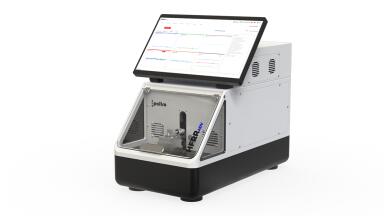
Quorum Technologies report on the use of their PP3010T cryo SEM preparation system which is being used to understand the formation of ice crystals in high altitude clouds.
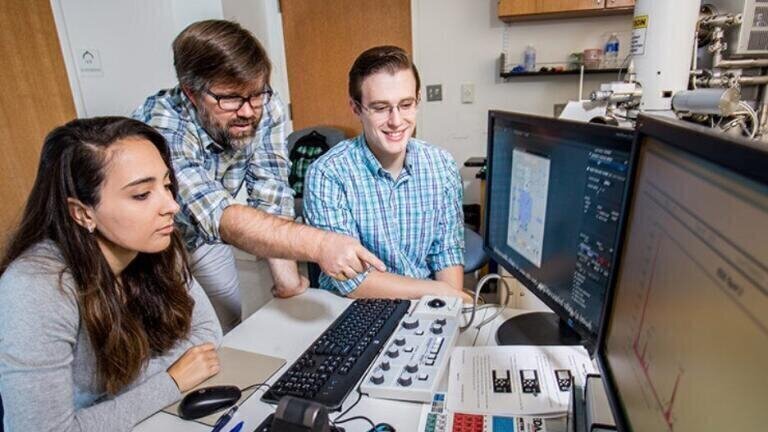
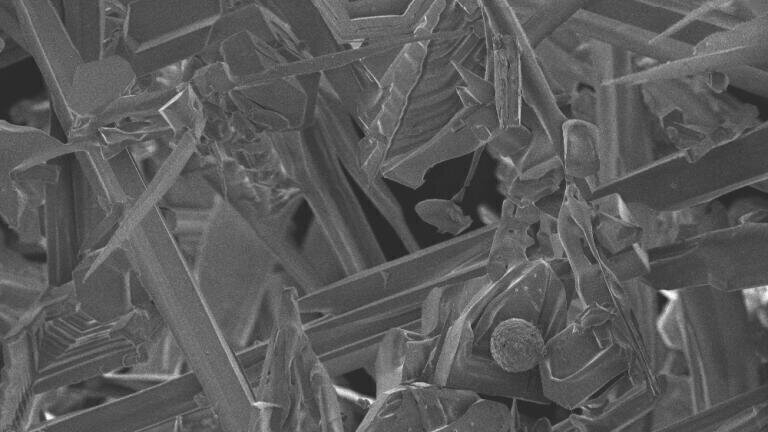
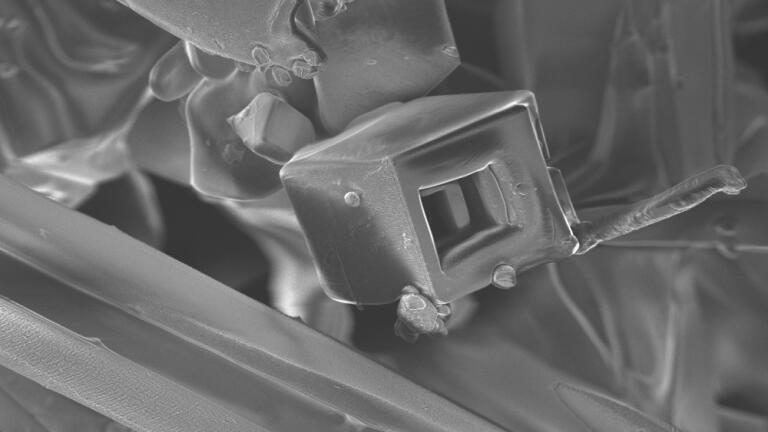
Dr Nate Magee is an associate Professor of Physics at The College of New Jersey (TCNJ) where he leads a team working to advance the understanding of the physical role of ice crystals in processes with high altitude clouds. Cirrus clouds are primarily composed of ice crystals that interact with solar radiation and IR radiation from the ground, and they play a significant, but still poorly understood role in Earth's climate. The precise shapes and textures of these cirrus ice crystals largely determine how solar radiation interacts with the clouds (i.e. reflection & scattering angles) but the microscale structure is still fairly uncertain. Dr Magee is working with the Quorum cryo preparation system to make high-resolution images, 3D reconstructions and statistical measurements of ice crystals that are grown in the lab under cirrus conditions as well as ice crystals that are collected and recovered directly from high altitude cirrus using weather balloons and robotic cryo-capture.
A cryo preparation system is vital to the success of these studies. Describing the work, Dr Magee said: “Keeping ice crystals very cold (sub -150°C) means that their vapour pressure will be sufficiently low that their shape and surface structure can be ‘locked’ in place as we image and analyse the ice particles. Working at Peltier cooling stage temps (maybe to -50°C) would not make this possible. The Quorum PP3010T transfer and interlock setup on our Hitachi SEM (with a few custom modifications on our part) has made it possible to transfer crystals from our lab systems directly into the SEM for imaging without exposing them to warmth or excess water vapour.”
So why did Dr Magee select the Quorum cryo-preparation package? “I have used Peltier cooling stages with FEI SEMs, which actually do have a few advantages for some types of in-situ ice growth experiments. However, as I have said, we required sub -150°C temperatures for this study so, after considering what was available, we chose to work with Quorum. Their full cryo temperature range and interlock prep chamber works very well for transfer experiments. We are still working to develop its functionality for in-situ dynamic experiments on growing ice.”
ILM 51.6 Sept 2026





 Product directory