News
Published over 14 years ago. See the latest and most current information on News.
Neil Clark
Scientists have made a discovery that could lead to possible personalised treatment of brain tumours.
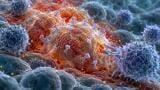
In a study in the journal Nature, researchers at the University of Texas MD Anderson Cancer Center revealed that although mbryonic enzyme pyruvate kinase M2 (PKM2) has a well-known role in metabolism and human cancers, it could also play a part in cancer formation.
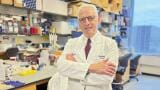
"Our research shows that although PKM2 plays an important role in cancer metabolism, this enzyme also has an unexpected pivotal function – it regulates cell proliferation directly," said senior author Dr Zhimin Lu, associate professor in the Department of Neuro-Oncology at MD Anderson.
He added that the fact that PKM2 contributes directly to gene transcription for cell growth was a very "surprising" finding.
Current epidermal growth factor receptor-based therapy is not very efficient, Dr Lu explained, so this discovery is important to the development of more personalised cancer treatments.
Recently, a University of Michigan Health System laboratory study also identified a possible treatment for sickle cell disease.
ILM 51.6 Sept 2026





 Product directory