News
Published over 13 years ago. See the latest and most current information on News.
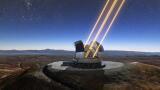
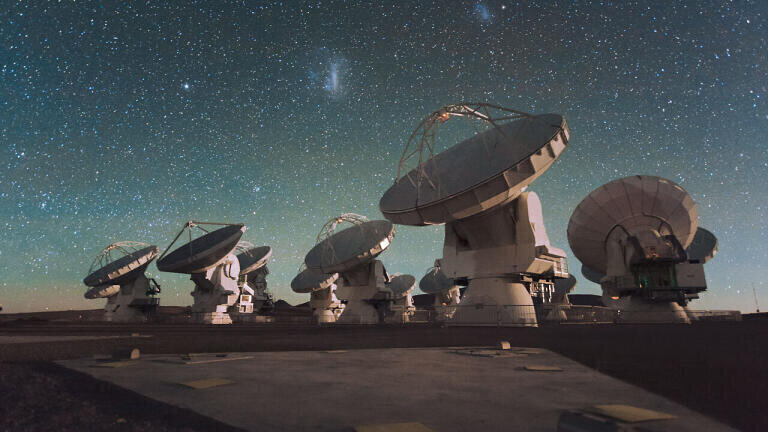
Scientists around the world have celebrated the monumental achievement of the completion of ALMA – the most complex ground-based telescope in existence. The telescope was officially opened during an inauguration ceremony in Chile, the result of two decades of work from institutions all over the world.
ALMA is a high-frequency radio telescope made up of 66 individual antennas; these are combined to create a telescope with an effective diameter of up to 16 kilometres. It will show us never-before seen details, in the millimetre and sub-millimetre wavelengths it sees, about the birth of stars and planets, and of infant galaxies in the early Universe. It will also discover and measure the distribution of molecules – many essential for life – that form in the space between stars.
Able to observe the Universe by detecting light that is invisible to the human eye, ALMA will show us never-before-seen details about the birth of stars, infant galaxies in the early Universe, and planets coalescing around distant suns. It also will discover and measure the distribution of molecules — many essential for life — that form in the space between the stars.
The observatory was conceived as three separate projects in Europe, USA and Japan in the 1980s, and merged to one in the 1990s. Construction started in 2003. The total construction cost of ALMA is approximately US$ 1.4 billion, of which ESO’s share is 37.5%.
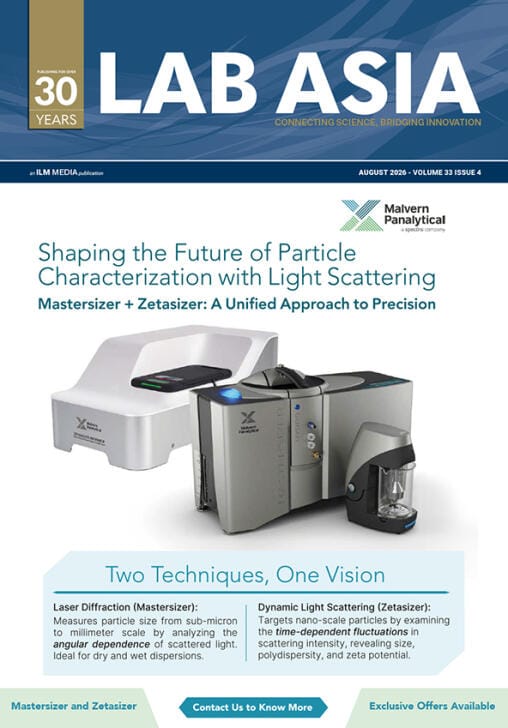
Lab Asia 33.4 - August 2026
 Product directory