
News
Published over 14 years ago. See the latest and most current information on News.
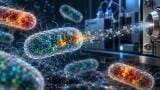
Researchers from Imperial College London have demonstrated that they can successfully build logic gates, which are used for processing information in devices such as computers and microprocessors, out of harmless gut bacteria and DNA. These are the most advanced biological logic gates ever created by scientists. Professor Richard Kitney, co-author of the paper* from the Centre for Synthetic Biology and Innovation and the Department of Bioengineering at Imperial College London, said: "Logic gates are the fundamental building blocks in silicon circuitry that our entire digital age is based on. Without them, we could not process digital information. Now that we have demonstrated that we can replicate these parts using bacteria and DNA, we hope that our work could lead to a new generation of biological processors, whose applications in information processing could be as important as their electronic equivalents."
Although still a long way off, the team suggest that these biological logic gates could one day form the building blocks in microscopic biological computers. Devices could include sensors that swim inside arteries, detecting harmful plaque and rapidly delivering medications to the affected zone. Other applications may include sensors that detect and destroy cancer cells inside the body and pollution monitors capable of neutralising dangerous toxins such as arsenic. The scientists constructed a type of logic gate called an ‘AND Gate’ from the bacteria Escherichia coli (E.Coli), which is normally found in the lower intestine. The team altered the E.Coli with modified DNA, which
reprogrammed it to perform the same switching on and off process as its electronic equivalent when stimulated by
chemicals. They also created a ‘NOT gate’ and combined the two types to form more complex components in a similar way that electronic components are made. The next stage of the research will see the team trying to develop more complex circuitry that comprises multiple logic gates.
ILM 51.6 Sept 2026





 Product directory























.jpg)