News
Published over 14 years ago. See the latest and most current information on News.
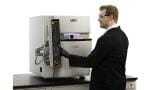
The National Laboratory Service (NLS) has become one of the first Environmental laboratories in Europe to invest in Agilent Technologies Quadrupole Time-of-Flight (LCQTOF) system, enabling it to offer clients an analytical screening service for trace level polar organics under the EU Water Framework Directive (WFD). The equipment, installed into the NLS’s Llanelli laboratory, brings a Liquid Chromatography/Mass Spectrometry (LC/MS) capability to assist in the monitoring and identification of potentially hazardous substances in water samples, in conjunction with passive sampling and conventional sampling techniques.
Currently, all screening techniques use Gas Chromatography/Mass Spectrometry (GC/MS), however only 30-40% of known pollutants can be analysed directly using this method, reports the company. Ian Rippin, commercial director at the NLS says: “With the stricter regulations of the WFD, we know there is a requirement for the LC/MS screening method in order to provide a more efficient way of identifying pollutants in effluents, surface water, ground water and in profiling our rivers in general. With this new piece of Agilent equipment, we now have the capability to offer this service.” Paul Stephens, Agilent’s Environmental Business Manager for Europe, commented: “We are delighted to see the NLS extending their analytical capability with the LC-QTOF, giving the ability to investigate the presence and fate of persistent polar organic pollutants in our rivers and thereby contributing to a better aquatic environment for all of us.”
Following the introduction of the EU Water Framework Directive (WFD), organisations responsible for environmental monitoring will have to increase the efficiency of their testing methods to meet the newly imposed regulations which aim to achieve compliance with a list of priority hazardous substances and to identify all other chemicals that could cause deterioration in the ecological quality in water bodies.
These include a large number of new pesticides, including fungicides, insecticides and biocides, as well as emerging pollutants such as pharmaceuticals, personal care products, steroids and explosives which are soluble in water.
ILM 51.6 Sept 2026




 Product directory