News
Published over 7 years ago. See the latest and most current information on News.
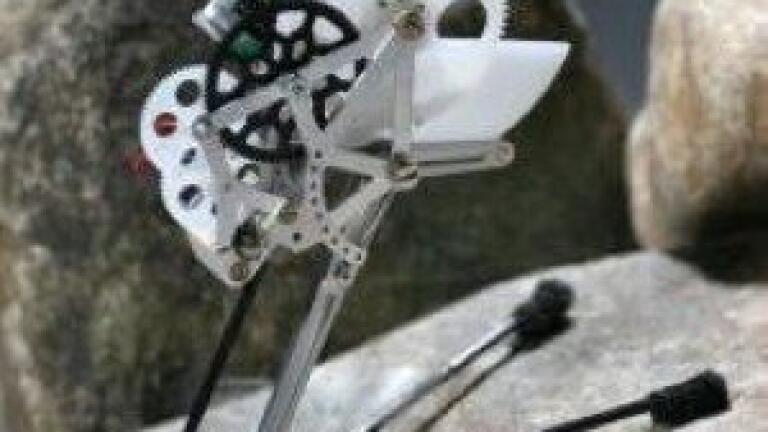
A project by scientists at Heriot-Watt, Glasgow, Dundee and Leeds universities, involving the development of a pill for the early detection of gut disease, has won the Humanitarian Award category of the 2019 Global Engineering Impact Awards. Sponsored by National Instruments, the competition winners received their awards at a ceremony in Austin, Texas, during May.
The Sonopill programme, which was led by Professor Sandy Cochran of the University of Glasgow, competed with 140 entries from over 25 countries. The project received funding from the Engineering and Physical Sciences Research Council (UK)
After swallowing, the electronic pill will allow doctors to image below the gut wall using ultrasound, which is not possible with current technology. This will allow the detection of diseases such as colorectal cancer earlier than with current clinical methods.
Professor Cochran said: “It’s a really great honour to be selected as a global finalist in the Humanitarian category of these prestigious awards. This reflects the outstanding work done by the EPSRC Sonopill Programme team.
“With significant help from National Instruments as a programme partner, we achieved all the technical goals we set ourselves, including in in vivo imaging and are now forging ahead with further work to realise first-in-human testing in due course.”
Professor Marc Desmulliez, who led the Heriot-Watt group working on the technology, said: “I am delighted that Sonopill was recognised by engineering professionals as being significant in terms of engineering impact.
“We are looking forward to attending the competition in the USA and will pursue further funding to bring this work closer to clinical trials.”
Last year Professors Cochran and Desmulliez, working with Dr Gerard Cummins, Dr Holly Lay and David Lines, won the EMEIA Engineering Impact Awards in the Innovative Research category for Sonopill.
ILM 51.6 Sept 2026


 Product directory


.jpg)
.jpg)




















.jpg)
