Air monitoring
Published over 5 years ago. See the latest and most current information on Air monitoring.
Digital solutions, innovative services and automation are transforming emissions monitoring gas analysis instrumentation. Power utilities, waste incineration operators and cement producers using co-combustion of waste all stand to benefit from the changes. Reduced capex for gas analyser setups, simpler operations and lower long-term costs are the payoffs they can expect.
Digital Solutions Cut Out Cost and Increase Reporting Uptime
The technology inside modern gas analysis instrumentation incorporates cutting edge electronics, so it is no surprise that gas analysers are leveraging digitalisation. Stephen Gibbons, Head of Product Management for the Continuous Gas Analysers product range at ABB Measurement & Analytics explains why: “the synergy between digital solutions, great services and excellent hardware means we are working in the sweet spot and providing unrivalled value for money to our customers”.
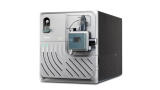
Augmented reality is one of the digital trends being applied to emissions monitoring gas analysers such as the ACF5000 FTIR instrument – commonly used on the most complex emissions streams from coal and biomass fired power generation, waste incineration or co-combustion of waste. As part of the ABB Ability™ suite of digital solutions, ‘Remote Insights’ allows an operator’s instrument technician to communicate directly with an ABB expert remotely. It is a two-way video and voice augmented reality interaction enabled by a hand-held device such as a tablet computer. It means that the technician can share what they are seeing directly with their counterpart at ABB and get instant feedback about the best course of action. In the past, training, maintenance, troubleshooting and repairs all meant a service call-out – not any longer.
Dynamic QR codes are another digital innovation within the suite of ABB Measurement Care service offers to help operators get closer to 100% uptime availability for their gas analysis instrumentation. This uptime target is important for all users but has special significance in regulated continuous emissions monitoring systems (CEMS) for environmental compliance. The Dynamic QR code displays the latest system configuration data and the real-time analyser status. It communicates with a proprietary ABB App called ‘my Installed Base (myIB)’ and can be scanned using a smartphone. The instrument owner can send the ABB service team real time information so that an engineer can offer advice immediately or follow up with a site visit to fix the issue.
Data privacy and data security are key topics in this digital age. The Dynamic QR code technology is sensitive to this issue because there is no physical connection between an operator’s gas analyser to our systems and yet we can securely transfer the key data.
Services simplify operations
Maintenance can be avoided if it can be shown to be redundant. That saves time, cost and improves safety. Digitalised services, such as the ABB Ability™ Condition Monitoring solution, have enabled ABB’s service teams to work with operators of gas analysis instrumentation to review the health of their analysers, on site or remotely, to anticipate failures before they occur.
Gibbons outlines a recent case where ABB gas analysers, condition monitoring and field service teams teamed up to support a major utility operator in Italy. “Our customer was targeting immediate cost-savings and looking for a reliable service provider to support their installed CEM gas analyser base across their 13 sites. To meet the cost-saving target, we offered a holistic approach including a standardized maintenance strategy across their sites with rapid response and optimized routine services”. ABB AbilityTM Condition Monitoring was implemented and the monthly review of the CEM devices resulted in a maximized emissions data reporting uptime”.
Gibbons continues: “at the same time our remote support capability has highlighted real savings to the customer because we can often reduce the number of scheduled site service visits. It’s through case studies like this that we have become certain that we deliver unrivalled value for money”.
Automated Hardware: Fit for the Future
The right gas analysis hardware can make a big difference. “The kit inside the box really matters and our product range is continuously evolving to ensure that our gas analysers are ideally suited to the application”. That’s how Gibbons, sees things.
“Take the example of combustion optimisation and emissions monitoring from a natural gas fired power plant. Our EasyLine product range can bundle together all the gas analysers with one controller that the power generator would need. For example, the Uras 26 Infrared (IR) gas analyser has two channels that can be used for simultaneous CO and CO2 emissions monitoring. It means simplicity and cost-effectiveness”.
Diving down one layer deeper, analysis of the total oxides of nitrogen (NOx) in the stack emissions may be required in the future. It has been common in the past to use the chemiluminescence (CLD) analytical technique to measure NOx. But, the CLD technique cannot differentiate between Nitric Oxide (NO) and Nitrogen Dioxide (NO2). On the other hand, the Limas gas analysers which ABB offers for NOx measurement are simple and robust UV gas analysers that can speciate between NO and NO2. At present this gives a greater level of visibility than is generally required, but as legislation develops, the purchase of a gas analyser which can perform at this level can be considered as future-proofing the capex investment.
ABB’s IR and UV gas analysers have self-calibration features which eliminate the need for manual calibration. The gas analysers are fitted with cells that are filled with gas mixtures of known concentrations. These enable automated calibration without the need for external gas cylinders. It means the instruments can be maintained with minimum labour intervention, significantly reducing cost and complexity.
ILM Guide 2026/27

 Product directory