News
The rapidly developing situation with the Bundibugyo Ebola outbreak in the Democratic Republic of the Congo and Uganda has highlighted the limits of current vaccination, the fragility of surveillance systems – especially in conflict-affected regions – and the urgent need to sustain Ebola research between epidemics
The outbreak of Ebola caused by Bundibugyo virus in the Democratic Republic of the Congo (DRC) and Uganda has renewed concern over global preparedness for filovirus epidemics, particularly those caused by this particular Ebola virus species for which no licensed vaccine or specific treatment yet exists.
The outbreak – declared in May 2026 – thought to have originated in eastern DRC but has now spread to affect parts of Uganda. The World Health Organization (WHO) has classed the event as ‘a public health emergency of international concern’, although it said it did not yet meet the criteria for a pandemic emergency. As of 8 June 2026, the DRC had reported about 550 confirmed cases and more than 100 deaths, according to national and international health reporting, while Uganda had reported 19 confirmed cases linked mainly to cross-border movement from the DRC.
The situation has placed renewed attention on Bundibugyo virus disease which is a severe and often fatal form of Ebola disease caused by Bundibugyo – one of the species in the genus Orthoebolavirus. Ebola viruses belong to the family Filoviridae and are characterised by filamentous viral particles and a negative-sense single-stranded RNA genome. Several Ebola virus species can infect humans, including Zaire ebolavirus, Sudan virus and Bundibugyo virus, but they differ in their epidemiology, case fatality rates and susceptibility to available medical countermeasures.
An outbreak of Zaire ebolavirus caused the largest and deadliest Ebola outbreak yet seen between 2014 to 2016 in the ‘West African epidemic’ which led to more than 28,000 reported cases and more than 11,000 deaths. By contrast, Bundibugyo virus has caused fewer recognised outbreaks but includes events in Uganda and the DRC in 2007 and 2012, when reported case fatality rates were about 30 and 50 per cent, respectively. The current outbreak has shown a lower reported case fatality rate in some areas but health authorities have warned that early figures may underestimate mortality because suspected deaths and unrecognised cases remain under investigation.
The disease caused by Ebola usually begins after an incubation period of between two and 21 days. Early symptoms include sudden fever, fatigue, muscle pain, headache and sore throat. These features are non-specific and can resemble malaria and other febrile illnesses that remain common in the affected countries and much of the region. The disease may then progress to vomiting, diarrhoea, rash, impaired kidney and liver function and – in severe cases – internal or external haemorrhage. The virus can enter through broken skin or mucous membranes before it replicates within immune cells such as monocytes, macrophages or dendritic cells. Severe disease is characterised by immune dysregulation, vascular leakage, abnormal clotting and multiorgan failure.
Transmission occurs through direct contact with the blood, secretions, organs or other bodily fluids of infected people, or with contaminated materials. During outbreaks, transmission can intensify in health-care settings if infection prevention and control measures prove to be inadequate. Local burial practices can also prove to be unsafe and amplify spread when mourners have direct contact with the body of a person who has died from the disease, such as in washing the body ahead of a funeral. The precise ecology of Ebola viruses and how it makes the zoonotic leap into humans remains complex and incompletely understood although it is thought that fruit bats play a significant role.
The current outbreak has underlined the consequences of the gaps that remain within available medical countermeasures. The vaccines that have been approved for Ebola disease have mainly been developed for the Zaire ebolavirus strain. Ervebo, is a recombinant vesicular stomatitis virus-vectored vaccine and provides rapid, single-dose, protection against Zaire ebolavirus. It has supported ‘ring vaccination’ strategies in previous outbreaks to aid containment spread.
However, no specifically validated and widely deployed licensed vaccine exists for Bundibugyo virus disease. Likewise, no specific approved treatment exists for the disease that follows exposure to and infection with Bundibugyo.
Progress in the development of therapies for Ebola disease has been strongest for monoclonal antibodies against Zaire ebolavirus. Inmazeb, also known as REGN-EB3, and ansuvimab, also known as Ebanga, were approved by the US Food and Drug Administration in 2020 after clinical evidence showed reductions in mortality in Zaire ebolavirus disease.
These treatments target blocking viral entry and support viral clearance with a viral glycoprotein. And while the successes of this antibody products has marked a major scientific advance it has not solved the wider problem. These products do not provide a reliable answer to non-Zaire Ebola virus species as well as access to these therapies remaining constrained by cost, logistics and the need for specialised outbreak infrastructure.
The discovery of effective small-molecule antiviral treatments has proved more difficult. Remdesivir, which targets viral RNA polymerase, has shown limited clinical efficacy for Ebola disease compared with monoclonal antibodies. Other investigational approaches, including favipiravir, galidesivir, brincidofovir and RNA interference therapies, have produced inconsistent or inconclusive results. The pipeline remains narrow, particularly for species such as Bundibugyo virus, where outbreaks are rare, unpredictable and difficult to study under trial conditions.
The clinical trial landscape reflects a persistent problem with research Ebola where the science only accelerates once disaster strikes, then diminishes again as the virus again fades from public attention. The 2014 to 2016 West African epidemic catalysed major progress in vaccines, diagnostics, trial design and international outbreak response. It also exposed severe weaknesses in health systems, including shortages of trained workers, personal protective equipment, laboratory capacity and trust within the affected community.
The later 2018 to 2020 epidemic in the DRC showed that faster diagnosis, improved surveillance, ring vaccination and coordinated responses could shift the trajectory of an outbreak, even amid insecurity brought about by conflict zones and the subsequent displacement of populations.
The 2026 Bundibugyo virus outbreak has shown that those vital lessons remain unlearned. In the DRC, a targeted healthcare response to the outbreak has again been limited by the complex and protracted armed conflict in particular. Ituri province has remained the epicentre but cases have also been reported in North Kivu and South Kivu. Uganda’s cases have been linked to travellers from the DRC and secondary infections among contacts, with no documented community transmission in Uganda reported or published at the time of writing.
Modelling by the US Centers for Disease Control and Prevention suggests the outbreak could reach 10,000 cases, or even exceed 20,000 in some scenarios, depending in part on how quickly infected people are identified and isolated. Public health experts have warned that such projections are uncertain, particularly when surveillance data are incomplete, but the modelling reinforces the key considerations of delayed isolation, weak contact tracing and limited access to affected communities can fail to prevent transmission of Ebola escalating rapidly.
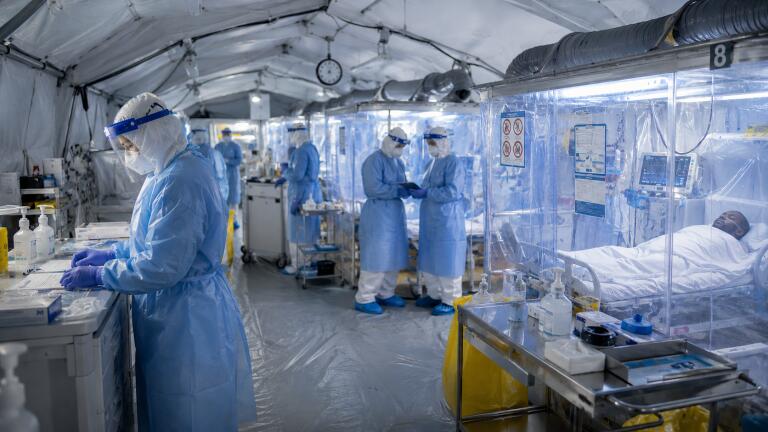
The public health response has therefore focused on surveillance, laboratory testing, case isolation, clinical care, contact tracing, safe burial practices, infection prevention and control, risk communication and community engagement. The Africa Centres for Disease Control and Prevention, headquartered in Addis Ababa, Ethiopia, and the WHO have also launched a continent-wide preparedness and response plan, with partners seeking substantial funding to support countries to prepare for, detect and respond to the outbreak.
Response to outbreaks alone is not enough of a strategy with effective preparedness against Ebola requiring use of the WHO’s One Health approach that recognises the links between human health, animal reservoirs of potential zoonotic infection and environmental disruption. Deforestation, land-use change, mining, wildlife contact and population movement can all increase opportunities for zoonotic spillover. These ecological drivers are harder to address than an emergency vaccination campaign but they are central to long-term prevention.
The current outbreak has made one point uncomfortably clear. The world has become better at responding to Ebola than it was in 2014, but it remains too reliant on simply being reactive. Sustained investment in vaccines for non-Zaire Ebola virus species, broader therapeutics, treatment platforms that are thermally stable in the heat of African nations, diagnostic capacity and locally trusted surveillance systems are all essential.
Bundibugyo virus disease may be rarer than the disease caused by Zaire ebolavirus but rarity is no reassurance given that the current framework for response means that rare equals lower levels of research investment. In outbreak science, it is a truism to say that a neglected pathogen can become an international emergency before the world has finished deciding whether to take it seriously.
ILM 51.6 Sept 2026



 Product directory





























.jpg)
