Research news
Researchers at Stanford University have used the generative artificial intelligence model Evo 2 to design complete bacteriophage genomes, producing viable viruses that can kill Escherichia coli and form phage cocktails capable of overcoming bacterial resistance
Researchers at Stanford University have used generative artificial intelligence (AI) to design complete genomes for bacteriophages capable of killing Escherichia coli, in a proof-of-concept study that could point towards novel approaches to tackle antimicrobial resistance.
Bacteriophages – often shortened to phages – are viruses that infect bacteria. Their name derives from the Greek ‘phagein’, meaning ‘to devour’, although phages do not literally consume their bacterial hosts. Instead, they infect susceptible bacterial cells, exploit their cellular machinery to reproduce and, in many cases, cause the cells to rupture and die.
This ability has made bacteriophages a longstanding focus of research into alternatives or complements to conventional antibiotics. Now, researchers have demonstrated that generative AI can design completely new to nature phage genomes that produce functional viruses with antibacterial activity.
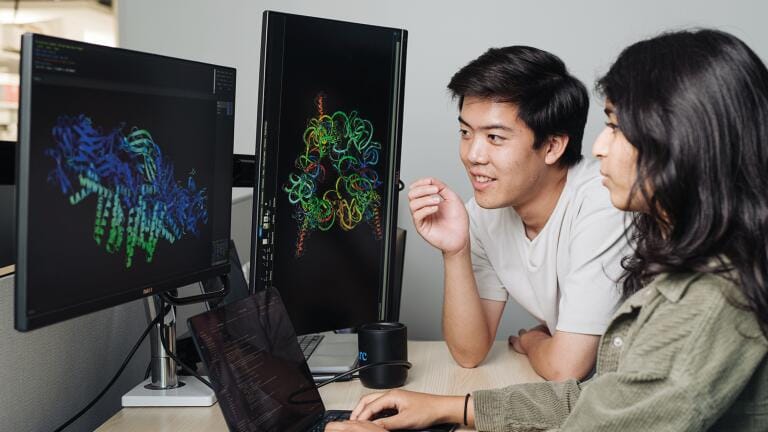
Dr Brian Hie, assistant professor of chemical engineering and ‘Dieter Schwarz Foundation Stanford Data Science Faculty Fellow’, and bioengineering graduate student Samuel King studied the bacteriophage ΦX174. Hie helped to create Evo 2, a generative AI model developed to analyse biological sequences and generate novel DNA.
When supplied with a short segment of ΦX174 DNA, Evo 2 was able to propose complete phage genome sequences. The researchers then tested whether these computational designs could be converted into real viruses capable of infecting and killing E. coli.
The work represents an important transition from purely computational genome generation to experimental biological validation. The researchers synthesised nearly 300 novel phage genomes designed by Evo 2 and assessed their activity against E. coli. From these candidates, they identified 16 particularly effective phages.
“In this case, we wanted the model to generate the entire genome end-to-end in a single left-to-right pass. We didn’t add anything,” Hie said.
“In lab tests, a few of Evo’s suggestions had higher fitness than the native ΦX174,” he said.
The researchers selected ΦX174 partly because of its unusually compact genome. It contains fewer than 6,000 DNA base pairs, compared with approximately three billion base pairs in the human genome. Its genome was therefore comparatively manageable as a first test of an AI model’s ability to design an entire functional biological genome.
Despite its small size ΦX174 remains a complete virus with the genetic information required to infect susceptible bacteria and reproduce. Designing a genome that retains all of these interacting biological functions presents a considerably greater challenge than to generate an isolated gene or protein sequence.
The capacity to produce multiple genetically distinct phages could also prove important because bacteria can evolve resistance to bacteriophages, just as they evolve resistance to antibiotics. A treatment that relies upon a single phage could consequently lose effectiveness as resistant bacterial populations emerge.
“If the bacteria gain resistance to a single phage, it’s game over for [that] medication,” Hie said.
“But if you have multiple genetically distinct phages in a mixture, it [becomes] harder for the bacteria to develop resistance to the entire cocktail,” he added.
Phage cocktails could therefore combine viruses that attack bacteria through different biological mechanisms or recognise different molecular targets. A bacterium that acquires resistance to one member of such a cocktail might remain susceptible to several others which could make it considerably more difficult for resistance to the treatment as a whole to evolve.
The researchers demonstrated this principle experimentally with the 16 selected AI-designed phages. Their mixture was able rapidly to overcome resistance in E. coli that was resistant to the naturally occurring ΦX174 phage.
“We have a proof of concept in the paper where we show that this cocktail of 16 phages rapidly overcomes resistance in E. coli that is immune to native ΦX174,” Hie said.
If the approach can be extended successfully, researchers could potentially use similar computational methods to design phages against other clinically important bacteria. Possible targets include Mycobacterium tuberculosis, which causes the disease tuberculosis, methicillin-resistant Staphylococcus aureus (MRSA) and Pseudomonas aeruginosa.
The latter is an important opportunistic pathogen, particularly among people with weakened immune systems, chronic lung conditions, burns or other serious illnesses. It is also associated with healthcare setting -acquired infections and can display resistance to several classes of antibiotics.
However, the ability of an AI model to propose a genome does not remove the substantial experimental difficulties associated with synthetic biology. Researchers must manufacture the DNA, introduce it into an appropriate biological system and determine whether the resulting genome produces a viable organism with the required characteristics.
Even the approximately 5,400-base-pair ΦX174 genome is difficult to interpret simply by inspection. Individual changes can alter genes, regulatory sequences, protein structures or interactions elsewhere in the genome, while combinations of apparently acceptable changes can make a genome non-functional.
King, the study’s first author, therefore developed a computational design framework to evaluate the thousands of genomes produced by Evo 2 and identify those most suitable for laboratory synthesis and experimental assessment.
“One of the main parts of the design framework was figuring out what traits the genomes should have based on ΦX174 and related phages,” King said.
“The framework involved several key steps: generating genomes using Evo 2, evaluating options based on the design criteria, selecting optimal candidates, synthesising them chemically and then testing them in the lab to see which genomes worked best,” he added.
This selection stage was particularly important because DNA synthesis remains relatively expensive. It would be impractical to manufacture and test every genome that a generative model could propose.
“With the cost of DNA synthesis still quite high, Samuel’s framework helped us focus only on the most viable alternatives,” Hie said.
The study has provided a proof of concept that an AI model trained on biological sequences can generate entire genomes sufficiently coherent to produce viable bacteriophages rather than merely plausible-looking DNA sequences.
Evo 2 has been released as an open-source model and is available free of charge, which allows other researchers to examine the system and apply it to biological sequence-design problems.
Open access to powerful biological design models has also prompted debate about biosafety and biosecurity. Hie has argued that broad availability could accelerate legitimate biological and medical research, although he acknowledged that modified versions of such technology had the potential for misuse.
He has maintained that naturally occurring pathogens currently represent a greater practical threat because established disease-causing organisms are easier to obtain and reproduce than hypothetical AI-designed pathogens. AI systems could also potentially incorporate safeguards that are absent from natural evolution and might ultimately help researchers to respond more rapidly to naturally occurring outbreaks or deliberate biological threats.
As a proof of concept, Evo 2 has exceeded expectations. In recognition of its potential across medical and biological sciences, Hie has made the tool available open source and free of charge. Anyone may download Evo 2 and use it to design novel genomes of their own.
The Stanford researchers now plan to explore whether Evo 2 can design larger and more complex genomes. Hie is working with researchers at Stanford and elsewhere to extend the technology and to develop additional bacteriophages.
Future work could also examine small bacterial genomes. The ability to design such genomes could eventually support the development of engineered microbes able to manufacture useful chemicals, pharmaceuticals, fuels or other biological products.
“The biggest open questions for me are how do we get greater genetic novelty and how do we get greater controllability of the outcomes?” Hie said.
“One of the most rewarding parts of this project is the creativity Evo 2 allows. New doors in science are now open because of what we can do with these models,” King said.
For further reading please visit: 10.1126/science.aec2657
ILM 51.6 Sept 2026



 Product directory




















,-photo-Karin-Allander.jpg)







.jpg)
