Research news
Researchers at Wayne State University and Indiana University have received renewed National Cancer Institute funding to develop a novel class of drugs that block cancer cells from repairing radiation-induced DNA damage, with the aim of making lung cancer radiotherapy more effective at lower doses
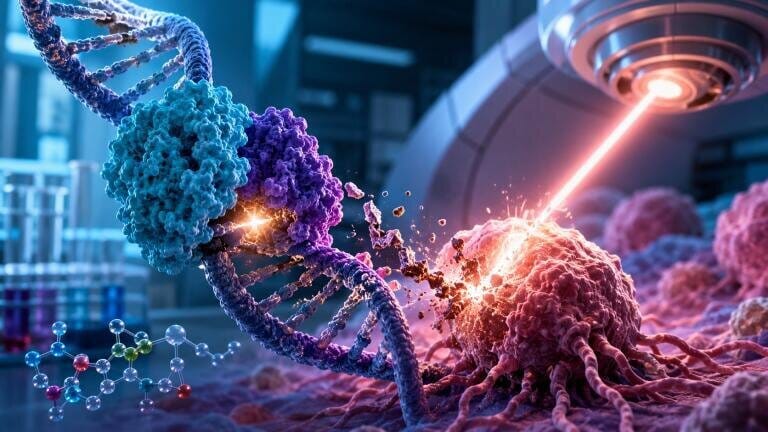
Cancer treatments such as radiation and chemotherapy work by shredding the DNA of cancer cells so that they can no longer multiply. However, cancer cells are notoriously resilient and often deploy their own internal repair mechanisms to fix treatment-induced damage, continuing to grow and ultimately becoming resistant to therapy.
Researchers at Wayne State University, Detroit, Michigan, and Indiana University, Bloomington, Indiana, have developed an approach designed to block cancer’s ability to heal itself, with the potential to make standard cancer treatments significantly more effective at lower and safer doses.
The multidisciplinary team has been awarded a renewed grant from the US National Cancer Institute of the US National Institutes of Health (NIH) to continue developing a novel class of drugs designed to dismantle cancer’s DNA repair machinery with unprecedented precision. The goal is to improve radiotherapy outcomes for patients with lung cancer.
The $3.2 million grant study, which is titled: ‘Discovery and development of Ku-targeted small molecule inhibitors: A novel mechanism of DNA-PK inhibition’, is led by Dr Navnath Gavande, associate professor of pharmaceutical sciences at the Eugene Applebaum College of Pharmacy and Health Sciences, Wayne State University, and Dr John Turchi, chair of biochemistry, molecular biology and pharmacology at Indiana University School of Medicine.
The funding specifically supports the development of Ku-targeted inhibitors as a strategy to enhance lung cancer treatment by improving tumour response to radiotherapy. Turchi is widely recognised as a pioneer in DNA repair and DNA damage response research, having dedicated more than two decades to understanding nucleotide excision repair and non-homologous end joining (NHEJ), a key pathway involved in cancer’s resistance to therapy.
The Gavande and Turchi laboratories were among the first worldwide to advance the concept of targeting the Ku70/80 DNA-binding complex, a central DNA damage sensor in the NHEJ pathway, as a therapeutic strategy for cancer treatment. Building on this foundation, the researchers continue to lead medicinal chemistry optimisation and mechanistic studies focused on targeting Ku70/80 for cancer therapy.
The research centres on DNA-dependent protein kinase (DNA-PK), a critical enzyme that cancer cells use to repair the DNA double-strand breaks caused by radiation, chemotherapy and other cellular stresses. DNA-PK has long been considered an attractive therapeutic target in cancer, and several DNA-PK inhibitors are currently being evaluated clinically by pharmaceutical companies. However, many current approaches target the catalytic activity of DNA-PK directly, an approach that can raise concerns about toxicity and effects on normal tissue.
Gavande and Turchi’s team is pursuing a different strategy. Rather thaΩn target DNA-PK directly, their compounds, known as Ku-DNA binding inhibitors (Ku-DBis), are designed to block Ku70/80, the DNA damage sensor that recognises broken DNA ends and recruits DNA-PK to initiate repair. Without Ku binding to damaged DNA, DNA-PK cannot be properly activated. In this way, Ku-DBis act as a precision ‘off-switch’ for a key DNA repair pathway on which cancer cells depend for treatment resistance.
During the initial phase of funding, the team discovered and optimised Ku-targeted small molecules that enter cells, inhibit DNA-PK activation, disrupt NHEJ-mediated DNA repair, and sensitise cancer cells to radiation and radiomimetic agents in preclinical models. With renewed NIH support, the investigators will move the programme into its next phase to more keenly define the DNA damage contexts and cancer vulnerabilities in which Ku-DBis may have the greatest therapeutic impact.
“In this next phase of our research, we will investigate various DNA double-strand break repair contexts to identify novel therapeutic combinations with Ku-DBis. We will also work to discover where Ku-DBis can create synthetic lethal interactions in cancers that are currently difficult to target with precision therapies, while continuing our medicinal chemistry efforts to optimise in vivo activity and delivery of these compounds,” said Gavande.
“Working on this project has been an exciting opportunity to contribute to the development of first-in-class Ku70/80 DNA-binding inhibitors and to better understand how targeting DNA repair can improve radiotherapy for lung cancer and other difficult-to-treat tumours,” said Dr Narva Kushwaha, a postdoctoral researcher in Gavande’s laboratory.
“Our approach of targeting the structure-specific DNA-binding protein Ku aims to significantly enhance our understanding of the DNA damage response and mechanisms of DNA repair. By targeting the earliest step in DNA-PK activation, we hope to create more selective therapeutic opportunities for cancers that depend heavily on DNA repair for survival,” said Gavande.
For lung cancer patients, the ability to sensitise tumours to radiotherapy could help to improve tumour control while reducing the dose-related toxicities that limit treatment. The development of these novel chemical entities represents a significant advance in precision medicine, offering fresh hope for safer, more effective treatments across a wide range of human cancers.
https://www.eurekalert.org/news-releases/1136506
ILM 51.6 Sept 2026



 Product directory


















,-photo-Karin-Allander.jpg)







.jpg)
