Analytical instrumentation
Coal and pet coke are essential in energy generation and metal production. Coke serves as a reducing agent in blast furnace steel plants, and it is used in the form of anodes to reduce aluminum in electrolytic cells. Across all industrial applications, the trace element composition of coal and coke is a critical quality parameter.
Impurities in coal and coke lead to cross contamination of the metal in the steel or aluminum production process and can severely affect product properties and, thus, impact final product value and margin. High chlorine levels, for example, lead to increased corrosion of equipment and elevated sulfur concentrations contribute to environmental harm through increased SOx emissions.
Trace element analysis performed by Wavelength-Dispersive X-ray Fluorescence (WDXRF) spectrometry offers several advantages over other elemental analysis methods. One of the main reasons is the simple and straight forward sample preparation. For the analysis of coal, pet coke or anode material, samples are simply ground to obtain a homogeneous material, mixed with a binder, and pressed in an aluminum cup. The following WDXRF measurement takes only a few minutes. Hence, important trace element results, mandatory for proper process control in the steel or aluminum production process, are available within minutes after taking a sample.
Other analytical methods, such as Inductively Coupled Plasma Optical Emission Spectrometry (ICP-OES), do require either microwave digestion, or some extensive sample ashing, involving hazardous chemicals to transfer the solid sample into liquid solution. Such sample preparation steps are costly and time-consuming, and the delay of the availability of the analytical results makes proper process control quite difficult. As WDXRF offers the advantages described, the technique is quite established for fast and reliable trace elemental analysis. This is also reflected in the release of several international norms for the trace analysis of impurities in coal, coke and carbon products, such as ISO 129801, ASTM D63762 or YS/T 63.163.
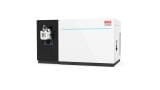
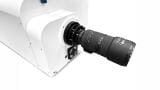
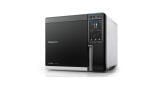
The WDXRF instrument, used for this application report, is the S6 JAGUAR (Figure 1). The instrument offers 400 W excitation power, a closely coupled beam path and a HighSense goniometer, ensuring low detection limits. It will easily quantify the main trace elements in pressed pellets, analyzed under vacuum conditions for optimal light element sensitivity and low cost of ownership. The HighSense goniometer can be equipped with up to 4 analyzer crystals and two detectors to cover the entire element range for coal and coke analysis. To further reduce the lower limits of detection (LLD), the XS-400 analyzer crystal can be added, which boosts the intensity for key elements by typically more than 35%.
For a few samples per day the S6 JAGUAR can be configured with manual sample loading, in case of higher sample throughput the system can be equipped with a 24-position EasyLoadTM sample magazine and TouchControl. Thanks to its unique SampleCareTM technology, important system components are protected from contamination coming from pressed pellets ensuring optimal instrument uptime. The vacuum pump reduces operation costs to a minimum (no helium needed!). By adding TouchControl, the S6 JAGUAR is extremely easy to operate ensuring failsafe operation even in high-throughput and shift-worker environments.
The standards and samples were ground to receive a very small grain size. A tungsten carbide vessel was used to avoid contamination with Cr and Fe. Gloves were used to avoid Na contamination. 7 g of anode coke powder was thoroughly mixed with 1.4 g of wax and pressed with an automated press in aluminum cups. A set of 15 international certified reference materials (CRMs) were used to setup a calibration for 12 key elements. The concentration ranges and limits of detection are listed in Table 1. The counting time was optimized for trace element detection, ranging from 10 to 100 s.
Each element is analyzed with an optimal set of instrument parameters: Light elements are excited with low voltage at maximum power of 400 W, while all heavy elements starting from Ca upwards are best excited with 50 kV. The 400 W are vital to achieve accurate trace element sensitivity (Figure 4). For Na the XS 55 multilayer, for the elements Al, Si and Cl the PET crystal is used and for the element range from K to Zn the LiF200 is applied. To enable better trace analysis and better line separation, an XS-400 crystal can be used for K - Zn.
Figure 4: Excellent spectral resolution of the WDXRF S6 JAGUAR spectrometer with its high 400 W excitation power leading to a higher count rate, resulting in lower limit of detections.
Accuracy tests and a 10-fold precision test have been performed to confirm the suitability of the S6 JAGUAR for this application. Table 2 proves the excellent accuracy and precision observed for some anode coke material.
Table 2: Accuracy test for anode cokes, comparing certified concentration with analyzed concentration, as well as a 10-fold precision test.
The control of ash forming elements and other impurities requires a spectrometer with high sensitivity to cope with the low concentration levels of some elements. The S6 JAGUAR with 400 W excitation power and closely coupled beam path offers excellent analytical performance for the analysis of coke, coal and carbon products. Equipped with an EasyLoad autosampler, the S6 JAGUAR is perfectly suited for a wide range of laboratories, combining flexibility with high sample throughput.
1.) ISO 12980: Carbonaceous materials used in the production of aluminum - Green coke and calcined coke for electrodes — Analysis using an X-ray fluorescence method. International Organization for Standardization (ISO), reviewed and confirmed in 2022
2.) ASTM D6376: Standard Test Method for Determination of Trace Metals in Petroleum Coke by Wavelength Dispersive X-ray Fluorescence Spectroscopy. ASTM International, reviewed and confirmed in 2017
3.) YS/T 63.16: Test method for carbonaceous materials used in the production of aluminium - Part 16: Determination of element contents - Wavelength dispersive X-ray fluorescence spectrometric method. Chinese Industry Standard, released 2019
Lab Asia 33.2 April


 Product directory






.jpg)