Laboratory products
The laboratory informatics industry is rapidly evolving. However, due to data silos and manual documentation leading to slower innovations, the life sciences industry is facing challenges due to missing critical insights and lost productivity
The capability for average knowledge workers to leverage these tools, which effectively allow for instant access to a ‘polymath in a tab’ for summarising complex documents, drafting emails and debugging code, has changed dramatically. Additionally, for businesses, the versatility of these tools being ‘general-purpose’ is one of the primary benefits. However, as the digital transformation of life sciences and industrial R&D accelerates, a critical realisation is dawning on laboratory leaders: the lab is not a general-knowledge world.
Laboratory environments are highly regulated, precision-driven, and physically constrained ecosystems. In this high-stake arena, the ‘disconnected advisor’ model of consumer AI falls short. To maximise the usefulness of AI within research and diagnostics, we need to shift from creating generic AI solutions to creating specific laboratory AI platforms that are tailored towards understanding the subtleties inherent in using a pipette, conducting a compliance audit and managing the complexities associated with working in a sterile environment.
If we want to unlock the power of AI in scientific research and diagnostic processes, it is very important to be able to create new Lab-Specific AI Platforms for Research and Diagnostics.
At their core, general-purpose AI tools are static and operate on probability. They predict the next most likely token in a sequence based on a massive corpus of diverse data. While this produces impressive reasoning capabilities, it lacks ‘domain-specific awareness’. In a laboratory, the cost of a hallucination isn’t just a typo in a memo; it is a ruined batch, a failed clinical trial, or a safety violation.
Laboratories follow strict guidelines, including GxPs, and a variety of ISO standards. All activities are done following validated workflows. A General AI does not know or understand how data is organised within these guidelines or how a particular result compares to the historical trend of instrument calibration. It views a set of results as text to be summarised, rather than a data point in a complex, multi-dimensional model of biological or chemical reality.
Without a deep understanding of the underlying science and the regulatory ‘moat’ surrounding it, general AI remains an outsider.
It can discuss the theory of chromatography, but it cannot verify if the specific peak integration on a chromatogram yesterday meets the internal quality control standards of a specific lab.
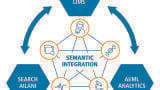
One of the most significant barriers to the utility of general AI in the lab is the lack of integration. Modern labs are powered by a trio of essential systems: Laboratory Information Management Systems (LIMS), Electronic Lab Notebooks (ELNs), and Instrument Control Systems. These are the ‘nervous system’ of the lab.
General-purpose tools ‘exist in a vacuum’. When a researcher uses a third-party chatbot to help interpret data, they are forced to manually export, de-identify, and upload that data. This creates a fragmented workflow where the AI acts as a disconnected advisor.
It can offer suggestions, but it cannot execute. It cannot trigger a re-test in the LIMS, it cannot automatically update an ELN entry, and it cannot monitor an incubator’s temperature in real-time.
A purpose-built lab AI doesn’t just sit on the sidelines watching you work; it rolls up its sleeves and joins you. Because it’s deeply woven into your LIMS, it already ‘speaks the language’ of your data. It knows your lab’s history and handles the documentation in real-time, so you don’t have to.
This changes AI from a tool you have to manage into a partner that frees you up to focus on science, not the paperwork.
In the competitive world of drug discovery and materials science, intellectual property (IP) is the primary currency. General-purpose AI models present a terrifying security profile for many lab directors. When data is sent to an external, third-party AI, it often exits the organisation’s sphere of control.
There are three primary risks here: residency, auditability, and exposure.
• Residency: Where does the data live once it’s uploaded? For regulated labs, data must often stay within specific geographic or sovereign boundaries.
• Auditability: Regulators require a ‘chain of custody’ for data. General AI tools rarely provide the granular logs needed to prove who saw what data and how that data influenced a specific conclusion.
• Exposure: The most significant fear is that proprietary formulations or experimental results could inadvertently be incorporated into the AI’s training set, potentially leaking trade secrets to competitors who ask the right questions.
Laboratory AI requires a high degree of trust. It necessitates platforms where the models are brought to the data, not the other way around. Purpose-built platforms offer private instances, ensuring that sensitive data remains isolated and that the AI’s ‘learning’ is confined to the organisation’s secure environment.
For a global enterprise, the requirements for an AI platform are even more stringent. A lab AI cannot be a monolithic ‘one-size-fits-all’ installation. It must support multi-tenancy and lifecycle independence.
In a large organisation, different labs may have vastly different requirements and validation schedules. Multi-tenancy allows these ‘tenants’ to be isolated from one another.
More importantly, lifecycle independence means that one department can upgrade their AI tools or adjust their workflows without affecting the ongoing functions of another lab.
Furthermore, these platforms must be elastic. Laboratory workloads are rarely linear; a sudden surge in testing or a massive new research project requires a platform that can scale its computational power instantly. However, this scaling must occur without ‘breaking’ the lab; meaning zero downtime and zero impact on the validated state of the software.
Perhaps the most overlooked difference between an office and a lab is the physical environment. In an office, the keyboard is the primary interface. In a lab, the researcher is often wearing gloves, working under a fume hood, or operating in a sterile clean room where touching a screen or keyboard is a contamination risk.
In this context, traditional chatbots are fundamentally flawed. This is why voice-first AI technology is not just a ‘cool feature’ for laboratories; it is a functional necessity. A digital assistant that can respond to ‘What is the next step in this SOP?’ or ‘Record the weight of this sample as 1.42 grams’ while the scientist’s hands are occupied is a game-changer for both productivity and safety.
An end to the chatbot model has opened a new way for scientists and other professionals to interact with AI. By utilising an AI interaction model that allows ‘hands-free’ use of technology, the AI can provide the professional with the additional assistance needed to be successful.
The hands-free interaction model allows scientists to keep their attention focused on the tasks of their design, while AI provides the other resources needed, always, to be successful.
‘AI Beyond Chatbots’ has been co-opted by many people for their own purposes and has been brought to a new level of usefulness.
The lure of general-purpose AI is understandable; it is accessible, familiar, and powerful. But for the laboratory, these tools are ultimately a square peg in a round hole. The lab is an environment of ‘high-resolution’ requirements, precision, integration, security, and physical ergonomics.
In future, laboratory science field will expand, develop, and evolve through specialised AI-based solutions that have been designed to support, manage and protect the laboratory environment, and that also allow scientists to use their own scientific vocabulary when they interact with laboratory-based AIs.
The shift from disconnected adviser AI models to purpose-built AI models that are designed for a laboratory will usher in a new digital assistant revolution for laboratory scientists where the AI collaborates with laboratory scientists and provides meaningful assistance for both think and do activities.
And we’re building it at LabVantage, with a launch right around the corner.
Join us at Pittcon 2026 (Booth 2837) | March 7–11 to see what’s next.
Experience purpose-built, goal-driven intelligence designed to tackle your lab’s toughest challenges: faster, smarter, and at scale.
Speak with our team and secure early access to the future today.
For more information, please see: https://www.labvantage.com/blog/from-knowledge-graphs-to-multi-agent-orchestration-how-can-agentic-ai-transform-the-future-of-scientific-innovation/
ILM Guide 2026/27



 Product directory