Mass spectrometry & spectroscopy
Published over 11 years ago. See the latest and most current information on Mass spectrometry & spectroscopy.
Instead, spurred by customer wants, these professionals challenged themselves to the seemingly impossible.
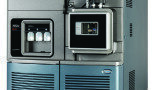
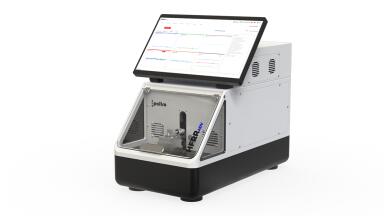
Bringing mass data to liquid chromatographers was a daunting task. Though the last two decades have seen mass spectrometry move from solely the hallowed halls of premier academic institutions into more routine laboratory environments, mass spectrometry has largely remained a process only for the most highly skilled analytical scientists. Waters, as an organisation, set out to determine if it would be possible to disrupt mass spectrometry by shattering barriers-to-entry by making it available in an instrument that was:
• Easy to use - with minimal specific training required for operation
• Familiar - with user interactions based around PDA operation
• Small enough to fit within or on top of an existing, bench-top liquid chromatography instrument stack
The team at Waters surmised that even though nobody before them had ever even tried, they would somehow make these attributes a reality. No matter how long it took, Waters was determined to bring mass detection to the masses.
The Challenge
The year was 2006. Waters began to hear rumblings from their customers, some of the largest pharmaceutical companies in the world and every other flavour of user, large and small, across industries, that the lack of widespread access to mass-specific data was causing problems, and, ultimately, affecting their bottom lines.
Chromatographers simply did not possess the training or experience necessary to access mass data. This conundrum was causing workflow challenges and limitations within labs. An absence of immediate access to mass data, specifically, a delay in receiving guidance from mass spectrometry experts, either internal or external, limited the level of certainty and confidence labs could align with their results.
Resulting inefficiencies were innumerable. For instance, method development within groups was slow. Quality was compromised. Analyses were conducted across multiple detectors, rather than consolidated into a single method. Lab groups responsible for building methods were forced to perform less specialised mass spectrometry analysis. This was because the labs that should be responsible for more routine work did not have the experience they needed to complete the tasks with confidence. Ultimately, a domino effect of inefficiencies resulted as method developers were then distracted from their primary tasks.
To put these workflow challenges into real-world perspective, consider that minimal exposure to mass-specific data within the liquid chromatography sphere was hypothetically creating:
• Delays in critical pharmaceutical drug development
• Lack of certainty in methods profiling hazardous substances in common, everyday items
• Food quality control inconsistencies
ILM 51.6 Sept 2026





 Product directory













.jpg)