Microscopy & microtechniques
Published over 15 years ago. See the latest and most current information on Microscopy & microtechniques.
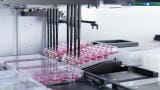
The development of techniques to grow cells in culture was a major breakthrough for the field of biology providing an instrumental tool in drug discovery, developmental biology, stem cell studies and cancer research. More recently, cell culture is being used to produce cells within a highly-controlled environment for therapeutic applications, to repair or replace damaged tissues within the body.
Traditionally, cell culture techniques have relied on 2D growth models, in which cells are propagated in simple monolayers on the flat surfaces of culture vessels, covered by a few millilitres of growth media. However, this system does not represent the most efficient way of growing cells, as the large internal volume of a culture receptacle is not fully exploited by cellular monolayers. To address such shortcomings, researchers have begun to turn to 3D bioreactor-based methods of cell culture that take advantage of the entire space available in a culture system. Optimisation of these techniques would help maximise the efficiency of cell growth, making bioreactor culture an attractive proposition for producing commercially viable quantities of cells for therapeutic and drug discovery applications.
ILM 51.6 Sept 2026




 Product directory













.jpg)