Water quality monitoring
South West Water’s case study explains how the company is using drones to improve environmental water quality monitoring while reducing risks to staff. The central problem is that South West Water regularly monitors rivers, lakes, estuaries and coastal waters near its assets, but some sampling points are difficult or dangerous to reach on foot. Mud flats, cliffs, soft verges and offshore locations can all make conventional sampling hazardous. This matters because inaccessible sites can lead to incomplete datasets, limiting understanding of both asset performance and environmental quality. The drone programme is therefore presented as a way to make monitoring safer, more accessible and more comprehensive.
The case study says the programme was developed to help South West Water meet regulatory requirements to assess compliance with environmental rules and the effects of discharges. It also supports reporting to the Environment Agency and wider public-facing commitments around explaining environmental water quality. Beyond direct sampling, the drones can also be used to gather aerial imagery for operational site management, invasive species control and water-quality incidents. To build this capability, South West Water worked with Vaspba RPS Ltd as the drone supplier and Eagle Eye for training. The company uses several drone types, including the SwellPro SD4, DJI Mini 4 Pro and Mavic 4, depending on the task.
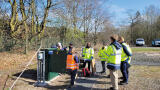
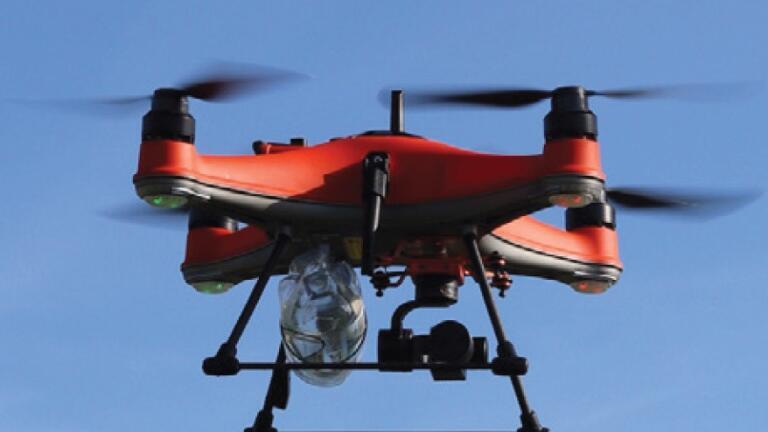
A major focus of the document is the SwellPro SD4, which has been procured with a water-sampling attachment for inaccessible locations. South West Water has trained members of its environmental performance and operational teams to plan and operate drones in line with Civil Aviation Authority requirements. Safety is treated as a core part of the programme. Because drones may need to be deployed from land owned by third parties, and sometimes where other people are present, all operations must be carried out under approved risk controls. The case study states that this includes CAA-approved RAMS and site-specific risk assessments before flights take place.
The SwellPro drone is highlighted because of its suitability for water-based sampling. The case study notes that it is IP67-rated, buoyant, self-righting and able to float while a sample bottle fills, meaning it can survive immersion and still take stable, repeatable samples from remote or offshore locations. This makes it especially useful in places where conventional equipment could be damaged or where sampling staff would otherwise be exposed to significant health and safety risk.
South West Water says the programme has already expanded beyond water quality sampling. With eight approved pilots currently involved, drone operations are also being used for invasive species and plant disease assessment, habitat mapping under the Upstream Thinking programme, and general operational imagery. The feedback so far is positive, although the document notes that calibration can sometimes be complex because of sensitivity to external factors. In response, South West Water has developed a training programme and standard operating procedures, including training for low-light operations.
The case study concludes by identifying reactive sampling around Combined Sewer Overflows (CSO) as one of the most important future uses. Because CSOs typically operate during heavy rain and adverse conditions, monitoring their effects on receiving waters is particularly difficult. The main constraint is securing timely permissions from landowners and relevant bodies. South West Water is therefore seeking prior approvals from landowners, local authorities and organisations such as the RSPB and Natural England so drones can be deployed more quickly when incidents occur. Overall, the document presents drones as a practical way to make environmental monitoring safer, more flexible and more responsive.
Lab Asia 33.2 April


 Product directory