.jpg)
Chromatography
Published over 9 years ago. See the latest and most current information on Chromatography.
Disulphide bonds are one of the most important post-translational modifications of proteins. They are stabilising the protein’s 3D structure and are crucial for their biological function. The reduction of intra- and intermolecular disulphide bonds is necessary for successful characterisation and assignment of the bonding sites by MS. Off-line reduction is performed using highly concentrated chemical agents, e.g. dithiothreitol (DTT)) that needs to be removed prior LC/MS analysis. Alternatively, thiol - free reducing agents such as TCEP (tris (2-carboxyethyl) phosphine) can be used. However, sample preparation remains laborious and difficult to combine with on-line LC/MS. Moreover, the possibility of on-line disulphide bond reduction can be beneficial for the determination of disulphide bond arrangements or top down proteomics strategy, which relays on fragmentation of intact proteins without enzymatic digestion.
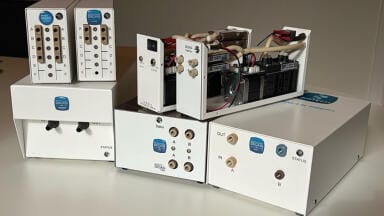
Finally, the use (LC)/EC/MS shows great potential for the fast assignment of S-S bonds in biopharmaceuticals. The ROXY EC and ROXY EC/LC system with its proprietary Titanium based electrodes are the ideal instruments to perform such studies.
Insulin, a small protein of 5733 Da is used as model compound for the S-S reduction. It consists of 51 amino acids forming two chains, A and B, and contains 3 disulphide bonds. Two interchain S-S bonds connecting chain A and B and one intrachain S-S bond located on chain A.
ILM 51.6 Sept 2026



 Product directory
























.jpg)
