Chromatography
Published over 3 years ago. See the latest and most current information on Chromatography.
PFASs (per- and polyfluorinated alkyl substances) are a class of almost 10.000 organofluorines. These man-made compounds, also designated ‘forever chemicals’, are highly persistent and at least some of them tend to accumulate and biomagnify in the environment. For that reason, more and more of these compounds are declared toxic as they pose a risk to human and environmental health.
These negative health impacts have forced governmental and standardisation bodies to take action against the most harmful PFASs. This has lead to the requirement for suitable analytical techniques to trace and regulate these chemicals. Targeted analysis of PFASs is complex and requires expensive instrumentation. However, determining non-targeted sum parameters is an easier and adequate way to screen for PFASs.
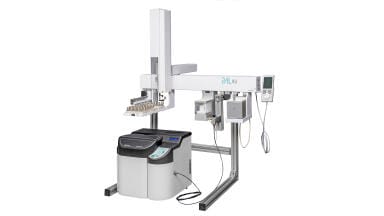
Adsorbable organically bound fluorine (AOF) is a sum parameter covering a broad spectrum of organofluorines. AOF analysis is an acceptable screening method for PFASs in water. DIN 38409-59 describes how to use the combination of pyrohydrolytic combustion and ion chromatography (CIC) for AOF analysis - for which Metrohm provides a robust and reliable solution.
More information online
ILM 51.6 Sept 2026





 Product directory