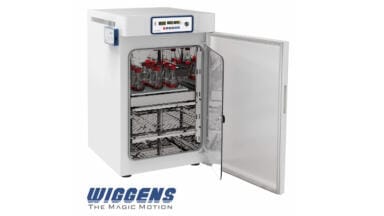
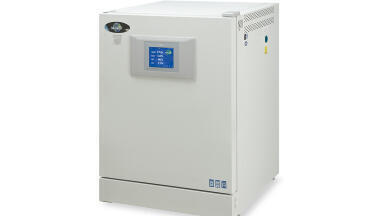
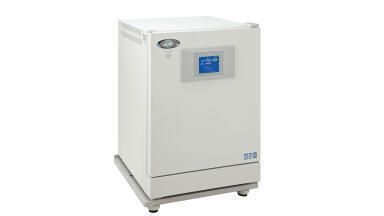
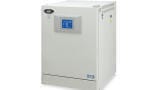
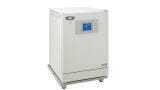
NuAire`s NU-5100 PureCell Direct Heat CO2 Air-Jacketed Compact Incubator weighs 135 pounds with a 4.4 cubic foot [125 liter] interior chamber which accommodates up to 16 SST shelves [3 are provided]. This incubator is designed to provide a reliable controlled in-vitro environment for optimum tissue cell culture growth. The stainless steel chamber also provides an environment for the storage and preservation of embryos, gametes and animal tissue cell cultures at or near body temperature. The five parameters, humidity, precise temperature and CO2 control, sterility and reliability contribute to optimum growth conditions.
The interior coved corners of the growth chamber are crevice free for ease of cleaning and preventing contaminants from becoming trapped. The blower fan keeps the air constantly re-circulating within the chamber, maintaining every cubic inch of volume at a uniform temperature. This airflow is distributed uniformly and at very low velocity, so as not to influence culture growth. A large replaceable 99.99% efficient HEPA filter cartridge continually filters the air that circulates in the chamber maintaining Constant Contamination Control [C3].
NuAire`s Incubators are valued priced offering personalized service and an all-exclusive warranty.
website



 Product directory












-(1).jpg)
-(1).jpg)
.jpg)
-(1).jpg)