Laboratory events news
Renowned astrophysicist Neil deGrasse Tyson often highlights how scientific and technological progress is accelerating at an exponential rate. Yet with this momentum comes a host of rapidly evolving challenges. At Lab Innovations 2025, the UK’s leading laboratory industry event, professionals from across the scientific spectrum will converge at the NEC Birmingham on 29–30 October to collaboratively tackle five key focus areas: AI and automation, biotechnology, sustainability, quality and compliance, and skills.
This year’s event theme, 'co-LAB-oration', places collaborative action at the forefront. Co-located with sister show Advanced Engineering, Lab Innovations 2025 will offer a shared, cross-disciplinary platform for scientists, engineers, and technical specialists to engage in open dialogue, spark innovation, and co-create solutions to shared problems.
Simon Farnfield, Event Director for Lab Innovations, said:
"When choosing this year’s theme, 'co-LAB-oration' stood out because it truly encapsulates the essence of laboratory work," said "Science thrives on partnership and shared purpose. The remarkable advances we see today - across every field - are the result of people working together."
Farnfield added that this year’s five priority topics were identified through community feedback: "These themes reflect the most urgent challenges we face as a sector. By focusing on areas such as AI and automation, we're not just recognising change - we're actively preparing the industry to evolve responsibly and sustainably."
The five key challenges addressed at this year’s show:
Artificial intelligence and automation have already transformed many laboratory processes, from diagnostics to data handling. For example, melanoma - one of the most dangerous forms of skin cancer - now benefits from faster diagnoses thanks to innovations in AI-powered imaging and targeted treatments. Over the last 50 years, UK survival rates have doubled.
Recent research involving 76 dermatologists demonstrated that an explainable AI system improved diagnostic accuracy and enhanced clinician trust. However, concerns remain. According to a recent study, 55% of scientists believe that AI models may enable fraud in open science.
The COVID-19 pandemic spotlighted the collaborative potential of biotechnology. Global teams - from researchers and clinicians to ethics boards and regulatory bodies - worked in tandem to accelerate vaccine development. It remains a landmark of 21st-century scientific cooperation.
Yet pressing health issues remain. Alzheimer's disease affects over 50 million people worldwide, a number expected to triple by 2050. Continued global collaboration will be critical to addressing such challenges.
Laboratories are major contributors to plastic waste, generating an estimated 5.5 million tonnes globally each year. To illustrate: manufacturing a single 96-well pipette tip rack emits around 0.3 kg CO2e and uses over 6 litres of water.
Industry leaders are responding. Eppendorf, for instance, now offers consumables made from renewable resources and centrifuges using natural refrigerants. As the sector grows, it must collectively commit to greener operations.
Maintaining high-quality standards across complex global supply chains is increasingly difficult. Biological materials, such as viral vectors or cell lines, must be transported under tightly controlled conditions to preserve efficacy.
Zuhal Reed, Esq., Senior Risk Management Attorney at Medmarc, explained: "Sourcing and producing high-quality biological material consistently is challenging. You also need to be confident in your suppliers and ensure transportation safeguards are in place."
Addressing the widening skills gap is essential for the UK’s ambitions to become a global science superpower. According to recent data, 78% of lab leaders worry about workforce capability, and 95% agree that upskilling must be prioritised.
Lab Innovations 2025 is designed to provide an environment where collaboration isn’t just encouraged - it’s built into the event experience.
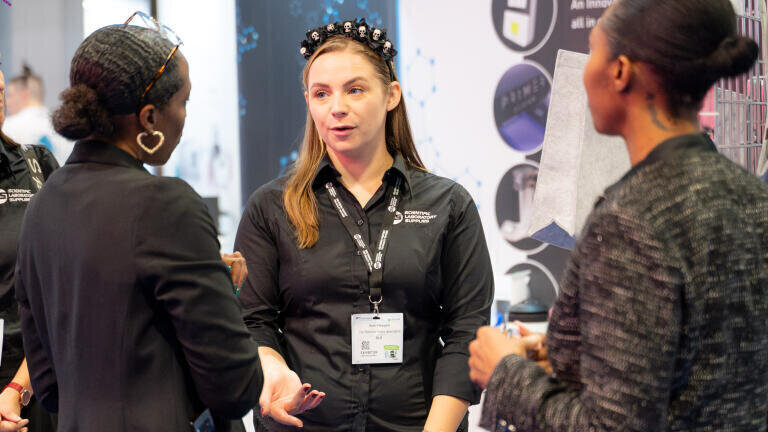
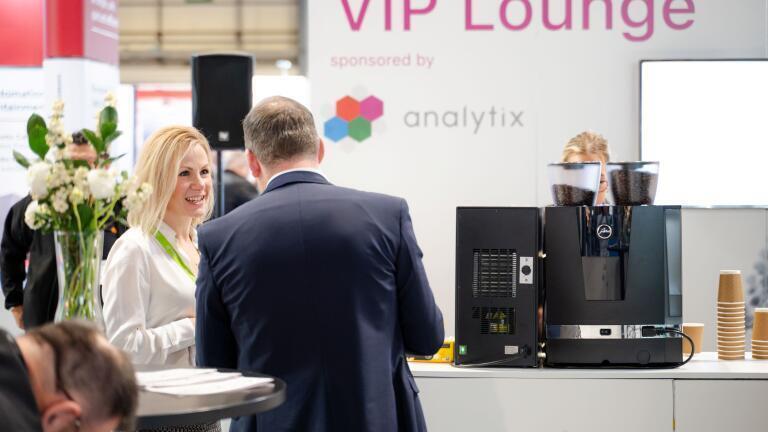
The central hub, Lab Square, is a networking space where professionals can meet across disciplines to exchange ideas, solve problems, and create new partnerships. It’s a setting intended to break silos and encourage real-time innovation.
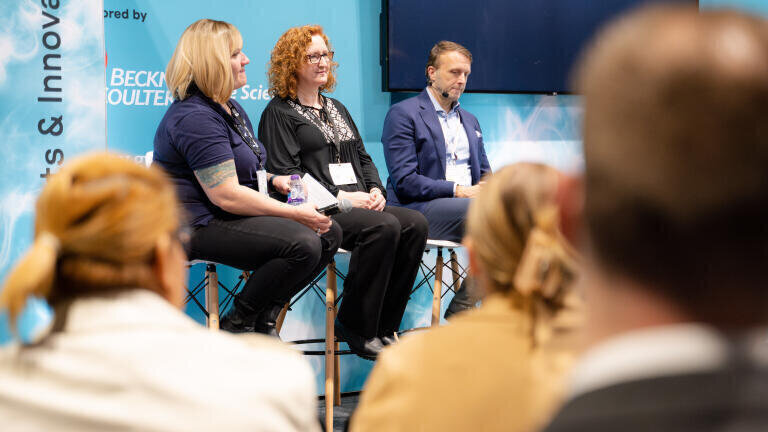
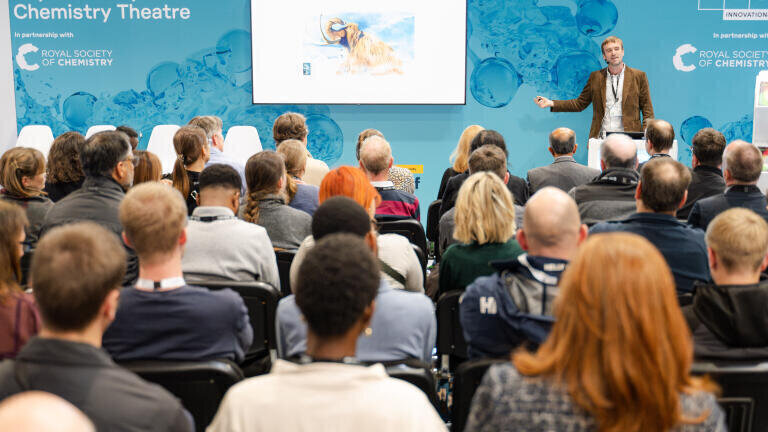
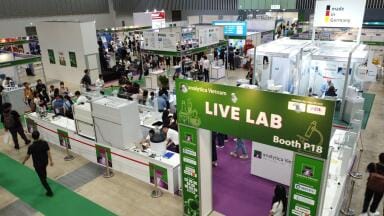
Two returning features - the Biotech Forum and the Quality Infrastructure (QI) Forum - each welcomed over 550 attendees in 2024 and are set to grow further this year. They’ll run alongside the event’s popular content theatres: The Royal Society of Chemistry Theatre, The Future of Laboratories Stage, and the interactive Live Lab.
Lab Innovations will spotlight initiatives designed to futureproof the workforce. The Science Council and UKAS, among others, will share strategies for continuous training and professional development, while exhibitors and technical experts will offer insights on emerging roles and technologies shaping laboratory careers.
The Biotech Forum will tackle key topics including biobanking, genomics, sustainability in drug development, and the integration of AI into biotech workflows. Attendees will include leaders like Thermo Fisher Scientific and SLS, alongside newcomers such as Imperial College London and Day2.
As Dr Adam Rutherford, researcher and science communicator at University College London, puts it:
"Lab Innovations is a cauldron of creativity. It's where scientists and technicians meet, see what’s coming next, and figure out how to apply new tools to questions we haven’t even asked yet."
The QI Forum - powered by UKAS, the British Standards Institution (BSI), and the National Physical Laboratory (NPL) - will deliver deep dives into accreditation, compliance, and supply chain risk mitigation. Practical demonstrations will offer visitors a hands-on look at how standards are evolving across the sector.
For attendees interested in lab sustainability, the Innovation and Sustainability Trail provides a curated walk-through of new technologies focused on reducing environmental impact. From water-efficient devices to recyclable lab plastics, the trail highlights innovations designed for greener science.
Green Light Laboratories’ Andy Evans will again host the Sustainable Laboratory, offering guided tours that demonstrate achievable sustainability gains. These include energy savings, waste minimisation and efficiency improvements based on real-world case studies.
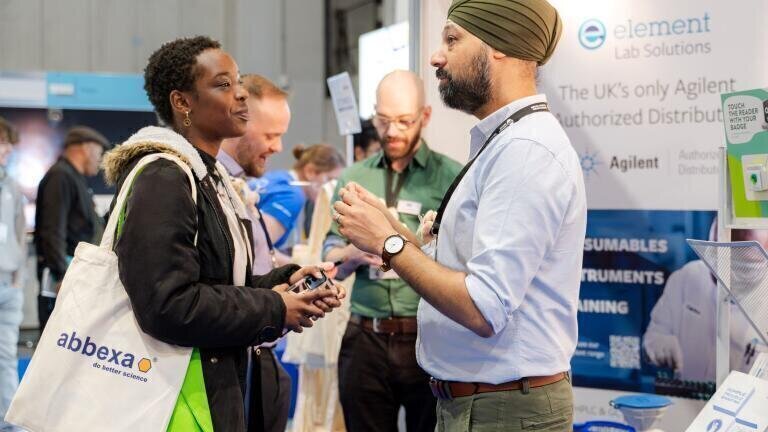
The show floor will feature leading names such as AstraZeneca, Innovate UK and Bronkhorst UK, giving attendees a chance to interact directly with solution providers and discover the latest in lab equipment, consumables, and services.
This year’s keynote programme includes broadcaster and environmentalist Liz Bonnin, and academic researcher Marc Reid. Their talks will take place at the Royal Society of Chemistry Theatre, alongside practical sessions designed to make innovation actionable.
Additional highlights include the Sustainability Pitches, which return on 30 October to showcase low-impact products, and the Lab Awards, recognising excellence across research, innovation and technical service.
Community voices
In 2024, Lab Innovations was widely praised by government and media attendees. Ajay Desai, Department for Business and Trade Area Team Manager, noted:
"This is where you see the full supply chain in one place. It opens your eyes to what’s possible."
Tom Whipple, Science Editor at The Times, added:
"Science is fundamentally about people meeting, sharing ideas, and finding solutions together. Lab Innovations makes that possible."
Join the UK’s largest gathering of laboratory professionals and be part of the conversation shaping the future of science. Whether you’re a technician, researcher, buyer or thought leader, Lab Innovations 2025 is your opportunity to connect, learn and lead.
Register now for Lab Innovations 2025 – 29–30 October NEC Birmingham. See you there.
Exhibition dates: Wednesday-Thursday 29th and 30th October 2025
Venue: NEC Birmingham, Hall 2
Opening hours: Wednesday 29th October from 9:00-17:00, Thursday 30th October from 9:00-16:00.
More information is available here.
Free tickets are available online here.
ILM 51.6 Sept 2026



 Product directory















.jpg)
.jpg)




.jpg)




.jpg)
