Laboratory events news
Ahead of Lab Innovations at the NEC Birmingham on 4 and 5 November 2026, National Physical Laboratory AI specialist Maya Carlyle examines whether artificial intelligence poses a threat to scientists’ jobs and asks how laboratories can trust AI
Artificial intelligence (AI), automation and the future roles of laboratory scientists will be among the subjects under discussion during this year’s Lab Innovations at the NEC in Birmingham, UK.
The rapid adoption of AI has led to scientists asking themselves some difficult questions. Will AI systems replace laboratory professionals? Can researchers trust results when they cannot fully examine how a model reached its conclusion? Who assumes responsibility if autonomous systems can make dangerous or commercially costly decisions?
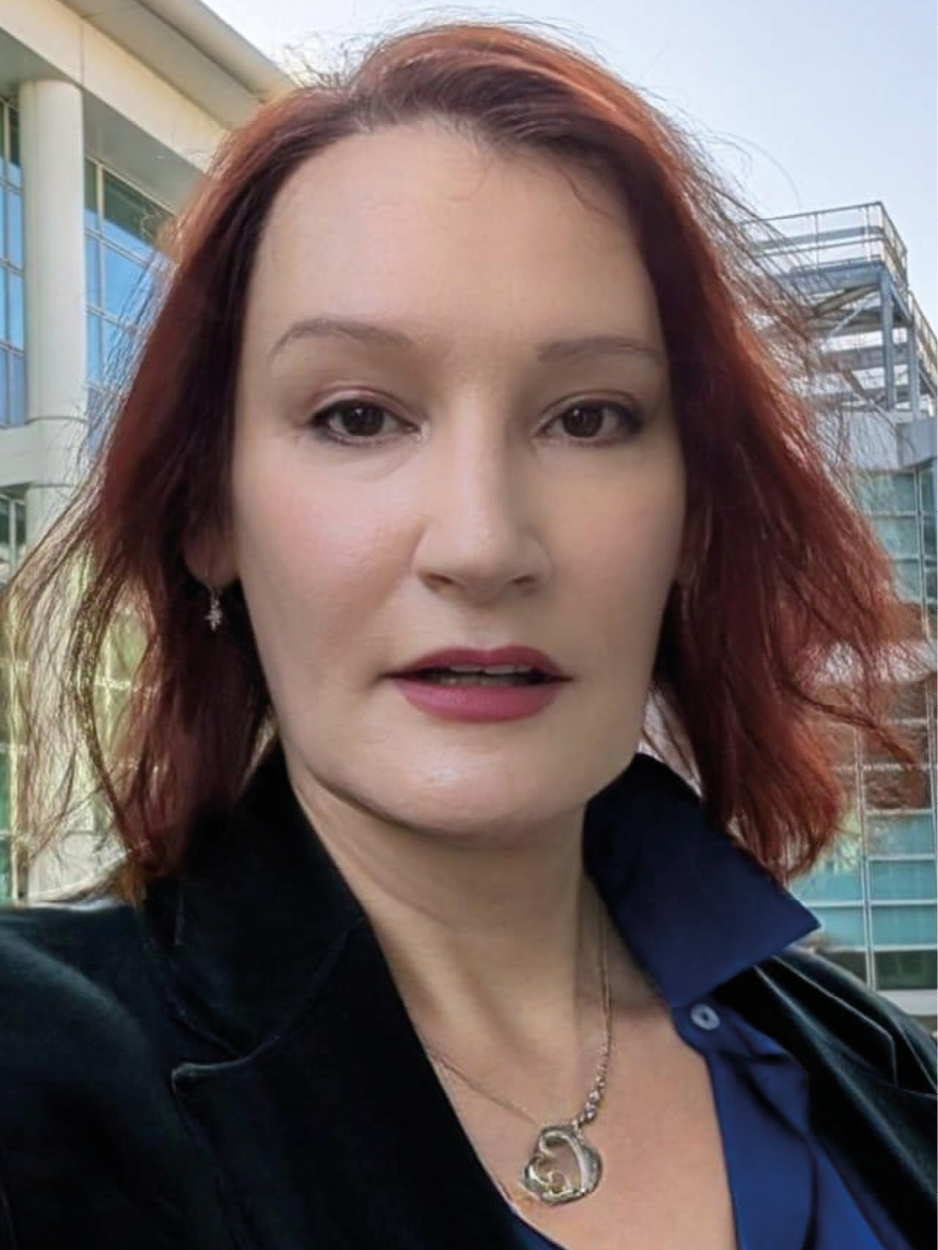 Maya Carlyle
Maya Carlyle, principal AI engineer at the National Physical Laboratory (NPL), London, UK, argues that AI should be deployed to support laboratory scientists rather than displace them. Carlyle has compared AI’s arrival with the emergence of photography during the 19th century.
At the time some painters said that cameras would make their work redundant but instead the growth in the use of photography to reproduce reality instead saw artists begin to pursue novel and different forms of expression.
AI could bring about similar changes in labs. Its principal value lies in its capacity to automate repetitive, low-value work alongside analysing the information gathered at a speed and scale which humans cannot match. Pattern recognition, literature searches, image analysis and anomaly detection can all pass to machines while scientists concentrate on experimental design, interpretation and decisions that require professional judgement and creative thought.
But this distinction becomes particularly important in regulated science. Laboratories cannot permit consequential decisions without proper levels of oversight and accountability. Once a result affects product safety, regulatory compliance, intellectual property or commercial risk, a named person or organisation must remain responsible for it.
In 2023 intellectual property law already reflected upon this principle. In a case concerning DABUS – an AI system credited with producing two inventions – the UK Supreme Court ruled that an inventor under the Patents Act 1977 must be a natural person. The judgment did not determine whether a machine could produce an invention but it confirmed that an AI system could not itself hold the legal status of inventor.
AI nevertheless has the potential to transform laboratory productivity. AlphaFold2, developed by Demis Hassabis and John Jumper at Google DeepMind, demonstrated how AI could predict protein structures that had previously demanded considerable time and specialist effort. Their contribution earned them half of the 2024 Nobel Prize in Chemistry, while David Baker received the other half for computational protein design.
Autonomous or ‘self-driving’ laboratories take this concept further by combining AI with robotics and laboratory automation. The most capable systems can propose hypotheses, design and conduct experiments, analyse the resulting data and use the findings to plan subsequent work.
A 2025 review in the Royal Society’s peer-reviewed, open-access scientific journal Open Science warned that these systems also posed safety and security concerns. In particular, greater access to automated chemistry could reduce the expertise required to attempt hazardous experiments. Separation between an AI controller, the physical laboratory and the human team responsible for the work could complicate oversight further.
For Carlyle, the answer is not to exclude AI from the laboratory but to retain the scientist ‘in the loop’. Machines may identify patterns or locate a promising result, but a person must still ultimately define the research question, judge the quality of evidence and accept responsibility for its consequences.
AI output is not automatically objective simply because a machine has produced it. Models can go on to reproduce limitations – or biases – that was originally present within its training data. While systems that cannot explain their reasoning – so-called ‘black boxes’ – prove difficult to use in regulated environments where every result must be traceable and defensible.
Laboratories can mitigate these risks through carefully selected domain-specific models, independent checks, controlled trials and deliberate attempts to expose weaknesses before deployment. Formal standards can also provide a governance framework.
International Organization for Standardization and International Electrotechnical Commission standard ISO/IEC 42001 specifies requirements for an AI management system and addresses accountability, transparency, risk and responsible use.
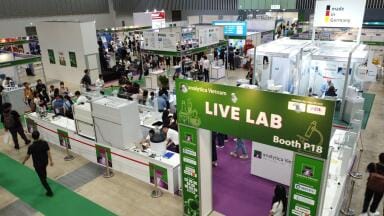
Lab Innovations 2026 will give laboratory professionals an opportunity to examine these questions alongside the technologies that have prompted them. The programme will include discussion of AI in laboratories, accreditation, quality and technical assessment.
The UK laboratory event will bring scientists, suppliers, manufacturers and technical specialists together for two days of equipment demonstrations, expert presentations and debate about the forces that will shape modern laboratories. The event takes place in Hall 2 at the NEC Birmingham on 4 and 5 November, with registration available through the Lab Innovations website.
ILM 51.6 Sept 2026



 Product directory















.jpg)
.jpg)