Mass spectrometry & spectroscopy
Published over 5 years ago. See the latest and most current information on Mass spectrometry & spectroscopy.
Proteins are the building blocks of all diseases, making them imperative to the drug discovery process. The ability to identify and characterise proteins empowers scientists with in-depth knowledge of the mechanisms of a disease, including the post-translational modifications (PTMs) that can alter protein behaviour. Ultimately, protein characterisation is a pillar of the biomedical research sector and arms scientists with the insight needed to develop efficient treatments and therapies.
Over the past decade, studying protein-protein interactions (PPIs) has become a top priority for drug discovery companies. PPIs play a fundamental role in biological processes, with studies suggesting that abnormal activity can support the development of life-threatening diseases such as cancer. Aberrant protein-protein interactions can also result in neurodegenerative and infectious diseases. As a result, studying and modulating PPIs has become an important branch of drug discovery and treatment development.
“In the past few decades, the modulation of PPIs has been recognized as one of the most challenging drug discovery tasks. In recent years, some PPIs modulators have entered clinical studies, some of which been approved for marketing, indicating that the modulators targeting PPIs have broad prospects,” reads the abstract of a study published in the peer-reviewed journal, Signal Transduction and Targeted Therapy.
Drugs designed to inhibit MDM2/p53 interaction have marked an exciting step forward for cancer research. Studies suggest that abnormalities in p53, a protein that suppresses tumours, are prevalent in around 50% of human cancers. These abnormalities are caused by a secondary protein called mouse double minute 2 (MDM2). Drugs designed to inhibit MDM2/p53 interactions and repair p53 function have exciting potential to treat cancer and prevent tumour growth.
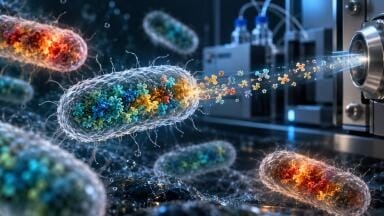
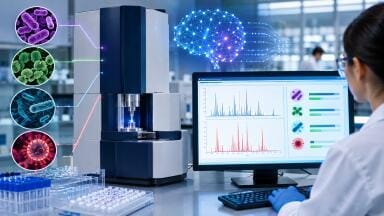
Proteins can be incredibly complex, with large proteins like titin made up of more than 34,000 individual amino acids. Advanced analytical techniques such as mass spectrometry (MS) are used to analyse and characterise proteins, as well as gain deep insight into post-translational modifications and protein-protein interactions.
Trapped ion mobility spectrometry (TIMS), a high performance gas-phase technique used to separate ions, is another technique used to analyse proteins. Find out more about TIMS, and the benefits it offers over traditional MS technologies in ‘Deep characterisation and quantitative analysis of proteins and post-translational modifications - How TIMS has extended the capabilities of MS and shown considerable potential for improving PTM identification and critical understanding of sign.’
ILM 51.6 Sept 2026





 Product directory