Mass spectrometry & spectroscopy
Published over 5 years ago. See the latest and most current information on Mass spectrometry & spectroscopy.
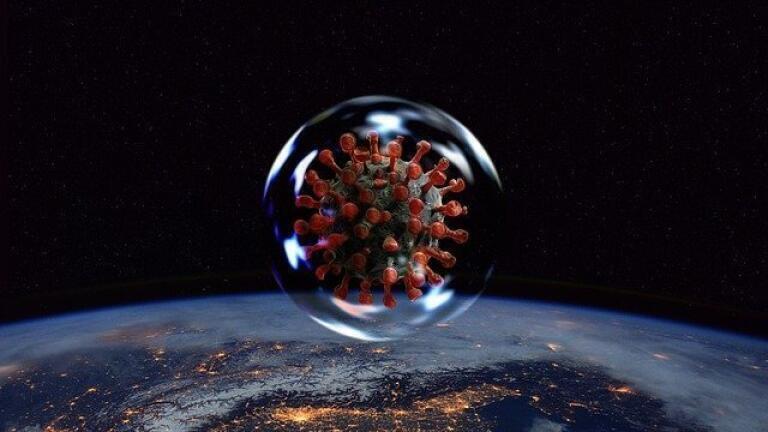
The new and highly infectious COVID-19 strain has dashed hopes 2021 will be a virus-free year, though health experts remain optimistic the existing vaccines will prove effective against the mutant strain. Representatives from BioNTech, the German biotechnology company behind the highly anticipated Pfizer-BioNTech vaccine, has assured the public it is “highly likely” the vaccine will protect recipients from the UK variant.
“We don’t know at the moment if our vaccine is also able to provide protection against this new variant,” says Chief Executive UÄŸur Åžahin. “But scientifically, it is highly likely that the immune response by this vaccine also can deal with the new virus variants.”
Åžahin says the proteins in the UK mutant strain are 99% similar to the existing strain, giving BioNTech “scientific confidence” the vaccine will offer an effective line of defence. “We believe there is no reason to be concerned or worried,” adds Åžahin. If adjustments do need to be made Åžahin says epidemiologists will be able to tweak the vaccine in around six weeks, thanks the advanced genetic technology used to develop the vaccines.
“In principle, the beauty of the messenger technology is that we can directly start to engineer a vaccine which completely mimics this new mutation – we could be able to provide a new vaccine technically within six weeks,” says Åžahin.
A recent study spearheaded by Pfizer and the University of Texas Medical Branch has confirmed the vaccine shows "no reduction in neutralisation activity" when exposed to the new and more infectious strain of the virus, which features the N501Y mutation. The findings were published on the preprint server bioRxiv, with authors confirming the “rapidly spreading variants of SARS-CoV-2 that have arisen in the United Kingdom and South Africa share the spike N501Y substitution.” While the findings are positive, Åžahin warns that vigilance and social distancing remain critical as vaccines are unlikely to have a significant impact on infection numbers until the middle of the year.
The ability to develop and tweak vaccines is heavily dependent on next-generation laboratory equipment. Find out more about the latest advances in ‘Benchtop NMR – Bringing New Access to Technology to the Next Generation of Scientists’ featuring commentary from Dr Venita Decker on behalf of Bruker Biospin Group. The article spotlights the new era of Nuclear Magnetic Resonance (NMR) spectroscopy and its wide range of applications.
ILM 51.6 Sept 2026



 Product directory


.jpg)
.jpg)