Microscopy & microtechniques
Published over 17 years ago. See the latest and most current information on Microscopy & microtechniques.
Nanoparticle production is currently an area of intense scientific research, due to a wide variety of potential applications in biomedicine, optics and electronics. Apart from all their advantages nano particles also present potential hazards, both under occupational safety and environmental aspects. Most of these are due to the high surface to volume ratio, which makes the particles very reactive or catalytic. For these reasons – and also for general production control – it is of great importance to closely monitor those particles. One major parameter is elemental composition.
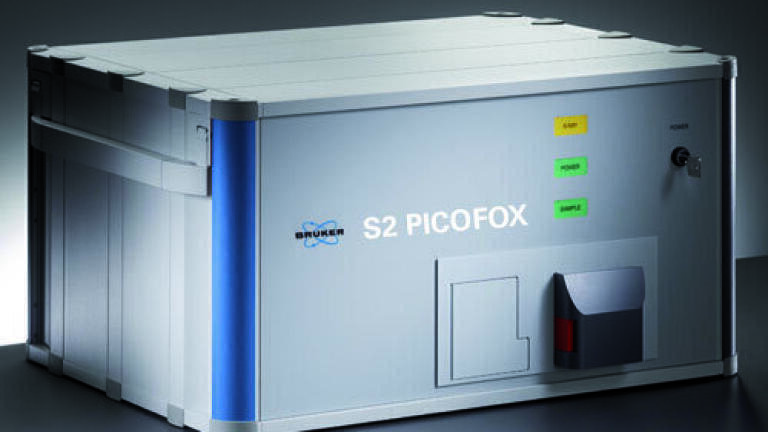
Bruker’s total reflection X-ray fluorescence spectrometer S2 PICOFOX is ideally suited for the elemental analysis of nanoparticles, as it can analyze smallest particle amounts down to a few milligrams or even micrograms of substance matter. As application examples, the elemental composition of different types of nanoparticles was analyzed, both to compare element ratios and to determine absolute element content. Additionally, Bruker has investigated the lower limits of detection of nanoparticles in this case TiO2, the results confirm that even smallest amounts can be detected.
The findings are summarized in lab report XRF 438.
ILM 51.6 Sept 2026





 Product directory