Mixers
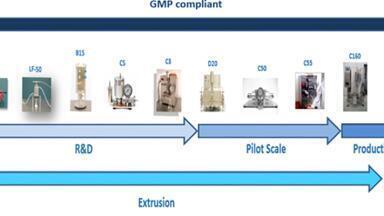
Scale up is a critical stage in any production process, and it is increasingly seen as a vital factor in decision-making when specifying a new mixer. Silverson Machines has over 75 years’ practical experience in helping clients with some of the most difficult mixing challenges, offering unrivalled expertise when it comes to successful scale up.
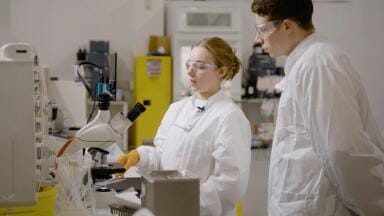
There are a number of key factors that must be taken into consideration by manufacturers wanting to scale up and expand their production process. It would be ideal to consider these factors before laboratory scale production is underway so that scale up can progress seamlessly, without the need for reformulation or changing the existing mixing process.
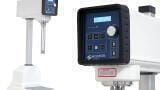
As such, at Silverson, we emphasise to our customers that mixing ‘parameters’ – tip speed, stator design, mixing time – need to be considered prior to the beginning of laboratory or pilot scale trials, as anything extreme among these parameters can be difficult to replicate on a larger scale. For example, a laboratory mixer running at 10,000 rpm for over an hour in a 1-litre beaker to get the desired product quality may be impossible to scale up.
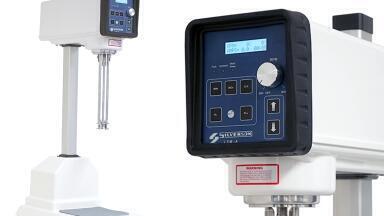
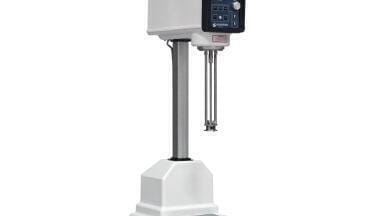
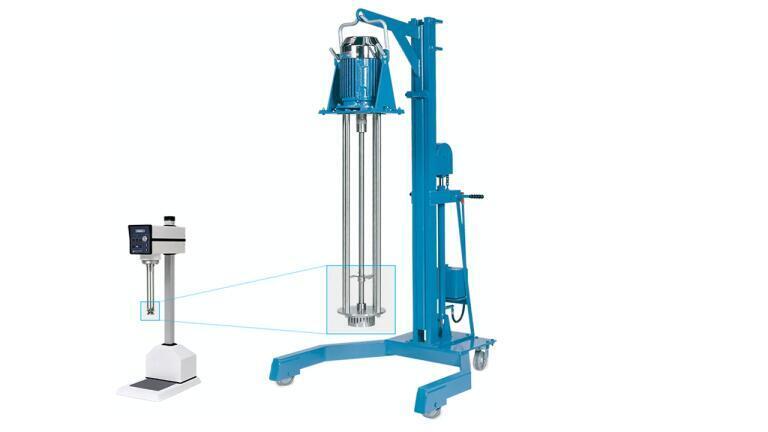
Another issue to remember concerning mixer speed is that lab mixers need to be run at a faster rpm than their production counterparts in order to ensure the peripheral tip speed – and therefore the shear rate – is comparable between laboratory and production scale equipment. It’s a common error to run a lab mixer at 3,000 rpm because this is the speed most production models run at, but this won't give you an accurate idea of full-scale results; in fact a lab mixer running at 8,000 rpm has a tip speed that more closely matches the standard 3,000 rpm of most larger in-tank batch mixers. Silverson has produced a mixing science animation on RPM Vs Tip Speed which can be found on their website.
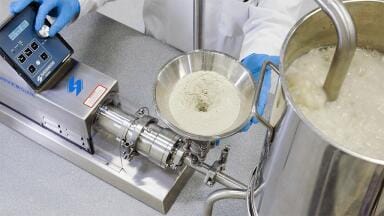
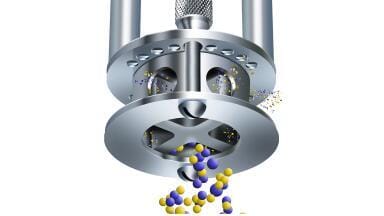
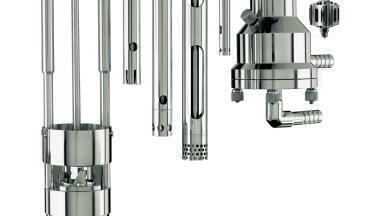
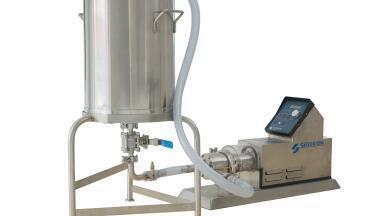
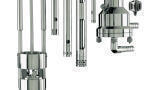
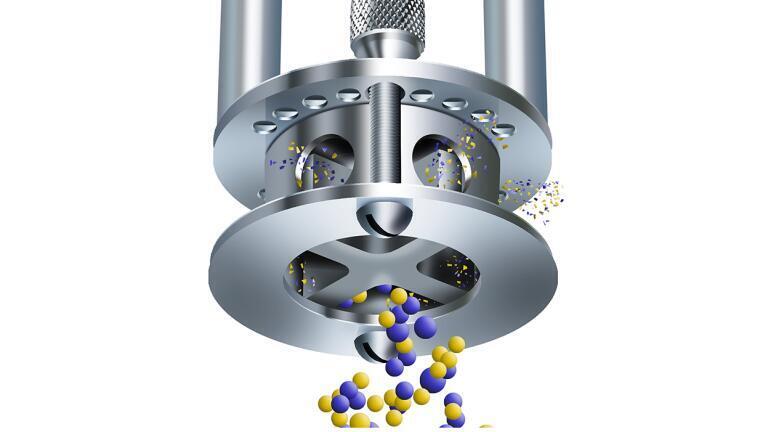
The stator design or geometric similarity also needs to be taken into consideration when wanting to replicate results. Silverson laboratory mixers are able to provide a good indication of whether or not a process is viable with a high shear mixer, but we also offer dedicated In-Line laboratory scale models which may be more appropriate when a process is going to be carried out with an In-Line mixer at production scale. The Silverson Verso Laboratory-scale In-Line mixer, for example, has the same geometric design as full-scale UHS In-Line mixers, meaning the rotor and stator are engineered to the same fine tolerances. This allows us to easily forecast the results of larger batches at smaller scale.
If you’d like to discuss scaling-up, or trialling a laboratory mixer, please get in touch.
More information online
ILM 51.6 Sept 2026




 Product directory