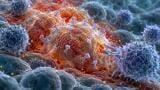
Scientists have found that a new class of drug developed to treat fungal infections could be rendered ineffective making the infection fatal.
A team at the University of Aberdeen published their findings for the Society for General Microbiology conference.
They claimed that if the dosage of new drug used to treat Candida albicans is not high enough to start with, the fungus can develop a defence which renders the treatment ineffective.
These findings are important as C.albicans is the most common hospital-acquired infection as it invades the body through plastic such as catheters, cardiac devices or prosthetic joints.
While healthy individuals could fight off the infection, the appearance of the fungus in patients with compromised immune systems could prove fatal.
"If levels of drug are used that do not kill the fungus straight away, C. albicans responds by producing an excess of the other key cell wall sugar polymer, called chitin. Fungal cells displaying higher levels of chitin can survive treatment with echinocandins, allowing infection to progress," said Professor Neil Gow, co-author of the findings.





 Product directory