Scientists have created a ground-breaking aqueous reagent that turns biological tissue transparent.
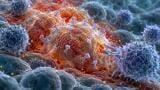
A team at RIKEN, a Japanese research organisation, undertook experiments using fluorescence microscopy on samples treated with the reagent and have produced vivid 3D images of neurons and blood vessels deep inside the brains of mice.
Published in Nature Neuroscience, the findings are likely to have important implications on the understanding of biology in future.
RIKEN explained that the reagent is highly effective and cheap to produce, making it ideal for the analysis of complex organs, such as, but not limited to, the brain.
Atsushi Miyawaki and his team at the RIKEN Brain Science Institute said that he envisioned the reagent, called Scale, being used on tissues from primate and human biopsy samples too.
"We are currently investigating another, milder candidate reagent which would allow us to study live tissue in the same way, at somewhat lower levels of transparency. This would open the door to experiments that have simply never been possible before," said Mr Miyawaki.






 Product directory