The last remaining artefact used to determine the 'correct' value of an SI unit could be removed from the system under proposals from
scientists at the National Institute of Standards and Technology (NIST).
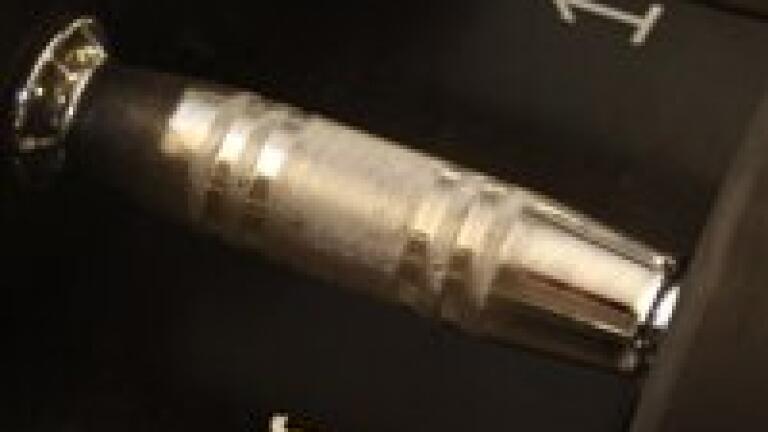
Mass is currently measured with respect to the SI kilogram, a cylinder of platinum-iridium 130 years old and stored at the International Bureau of Weights and Measures.
But the French relic could soon be more of a museum piece following
scientists' suggestions that it should be replaced with a calculation including seven known natural constants and based on Planck's constant.
The Planck constant h has an internationally agreed value and is measured in kilogram metres squared per second - making it possible to reverse-engineer an accurate and agreeable figure for the kilogram from its value and other SI units.
Named for its French title Le Systeme International d'Unites, the SI system is based on units of metres, kilograms and seconds, rather than centimetres, grams and seconds as was commonly the case before its inception in 1960.




 Product directory